Senior Congress leader Shashi Tharoor has sparked debate with his candid remarks on India’s tourism sector, urging the government to prioritize infrastructure and policy reforms over direct promotional campaigns. Speaking on the state of tourism, Tharoor highlighted stark contrasts between India and its Southeast Asian neighbor Thailand, underscoring the urgent need for structural changes.
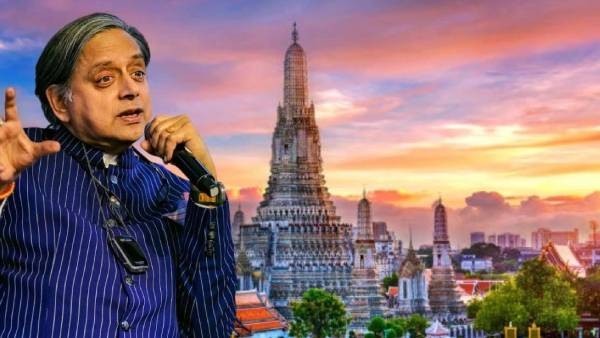
Tharoor observed that Bangkok attracts more tourists in a single month than India does in an entire year, a comparison that underscores India’s underperformance despite its vast cultural and natural wealth. He further noted that Thailand remains cheaper for tourists to visit than India, even though Thailand enjoys a higher per capita income. This, he argued, reflects systemic inefficiencies in India’s tourism ecosystem.
According to Tharoor, the government’s role should focus on building infrastructure, offering tax incentives, and framing supportive policies rather than leading promotional efforts. He emphasized that the private sector is better positioned to market India as a global tourist destination, given its agility, creativity, and ability to adapt to changing trends.
His remarks come at a time when India is striving to boost international arrivals, with campaigns like “Incredible India” attempting to showcase the country’s diversity. However, Tharoor’s critique suggests that without robust infrastructure — including better roads, airports, sanitation, and hospitality standards — promotional campaigns alone will not yield significant results.
Industry experts have echoed similar concerns, pointing out that India’s tourism potential is often hampered by logistical challenges, inconsistent policies, and high costs for visitors. Tharoor’s call for policy-driven reforms aligns with broader demands from stakeholders who believe that India must modernize its tourism framework to compete with destinations like Thailand, Singapore, and Malaysia.
The statement also highlights the importance of collaboration between government and private players. While the government can create an enabling environment through incentives and infrastructure, private enterprises can leverage innovation and global marketing strategies to attract tourists.
As India looks to position itself as a premier destination for cultural, spiritual, and adventure tourism, Tharoor’s remarks serve as a reminder that structural reforms, not slogans, will determine success. His vision points toward a model where policy and infrastructure form the backbone, while the private sector drives promotion and engagement.