
Harshit Mulchandani, who became widely known after applying for Zomato CEO Deepinder Goyal's controversial Chief of Staff role, has revealed why he decided to leave the company just 16 months after joining. In a detailed post on X (formerly Twitter), Harshit reflected on his unconventional journey, describing it as one of the most transformative experiences of his career despite his relatively short tenure.
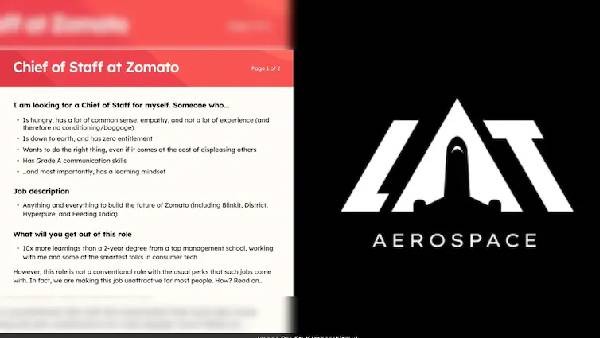
The story began with Deepinder Goyal's viral Chief of Staff job posting, which sparked nationwide debate. The original advertisement mentioned that applicants would work without a salary during the first year and referenced a ₹20 lakh contribution to charity, leading many to criticize the hiring process as elitist and unconventional. Later, Goyal clarified that no candidate actually had to pay to join, and those selected were compensated appropriately for their contributions.
Harshit, who had been working in Toronto, Canada, decided to take a leap of faith by applying for the role. His application ultimately opened doors to a high-impact position within the Zomato ecosystem, where he worked on strategic initiatives alongside senior leadership. According to Harshit, the experience gave him exposure to building businesses, solving complex operational challenges, and learning directly from some of India's leading entrepreneurs.
After 16 months, however, Harshit announced that he had chosen to move on. Explaining his decision, he said he felt it was the right time to pursue the next chapter of his entrepreneurial journey. Rather than leaving because of dissatisfaction, he described the decision as one driven by growth and the desire to build something new.
Harshit revealed that he would now be focusing on LAT Aerospace, a startup initiative where he played a role in product development and strategy. He expressed gratitude to Deepinder Goyal and the leadership team for trusting him with responsibilities that accelerated his learning far beyond what a conventional corporate role might have offered.
His post also reflected on the risks involved in leaving a stable international job for an unconventional opportunity in India. Looking back, Harshit said the decision proved worthwhile because of the experiences, mentorship, and network he gained during his time with the company.
The Chief of Staff hiring campaign itself remains one of the most talked-about recruitment drives in India's startup ecosystem. What initially appeared to be a controversial job advertisement eventually resulted in thousands of applications and several hires across Zomato and its group companies. Deepinder Goyal later confirmed that the recruitment exercise identified talented individuals who were placed in impactful leadership roles.
Harshit's story highlights how unconventional career decisions can sometimes lead to unique learning opportunities. While his tenure lasted only 16 months, he says the experience reshaped his perspective on startups, leadership, and entrepreneurship, making it one of the most valuable chapters of his professional life.