
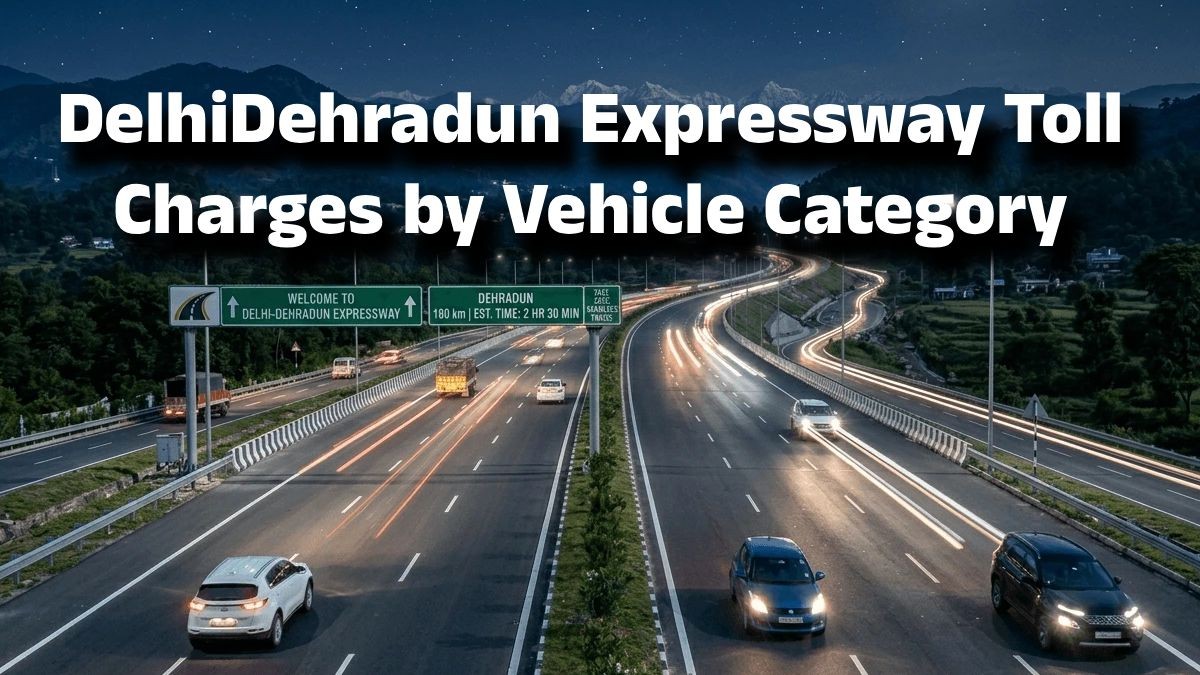
Delhi–Dehradun Expressway Toll Charges by Vehicle Category
1. Cars / Light Vehicles (SUVs, Sedans, Hatchbacks)
Charge: ₹675 one-way
Exemption: First 18 km free of toll
System: FASTag mandatory for automated collection
2. Two-Wheelers
Charge: Not applicable (two-wheelers are not permitted on expressways for safety reasons)
3. Light Commercial Vehicles (LCVs, Vans, Mini Trucks)
Charge: Approx. ₹1,100–₹1,200 one-way
Details: Higher than cars due to increased axle load and road usage
4. Buses (Passenger Transport)
Charge: Approx. ₹2,200–₹2,500 one-way
Details: Based on seating capacity and vehicle size
5. Heavy Trucks (Multi-Axle Vehicles)
Charge: Approx. ₹3,500–₹4,000 one-way
Details: Charges vary depending on number of axles and cargo weight
6. Oversized / Special Category Vehicles
Charge: ₹5,000+ one-way
Details: For vehicles carrying oversized loads or requiring special permits
Key Expressway Features
Length: 210 km, six-lane corridor
Wildlife Corridor: 12-km elevated stretch over Rajaji National Park
Infrastructure: 340-meter tunnel, 113 underpasses, 12 interchanges, rest areas, food courts
Travel Time: Reduced to 2.5 hours from Delhi to Dehradun
Cost of Project: ₹12,000 crore
FAQs
Q1: Is FASTag mandatory?
Yes, toll collection is fully automated via FASTag.
Q2: Are two-wheelers allowed?
No, two-wheelers are prohibited on expressways for safety reasons.
Q3: Will toll charges differ for return trips?
Yes, return trips may have discounted rates depending on duration of travel (usually within 24 hours).
Q4: How many toll plazas are there?
Five toll plazas across the route.
Cars will pay ₹675 one-way, while buses and heavy trucks will pay significantly higher tolls. The Delhi–Dehradun Expressway ensures faster, safer travel with modern toll systems and eco-friendly infrastructure.