
Prime Minister Narendra Modi made history in Assam by landing aboard a C-130J Super Hercules aircraft on the Moran bypass in Dibrugarh, inaugurating the Northeast’s first highway-based Emergency Landing Facility (ELF). The 4.2-kilometer stretch of reinforced highway has been developed at a cost of around ₹100 crore, designed to serve both military and civilian purposes. The moment was symbolic, showcasing India’s growing emphasis on strategic infrastructure in border regions.
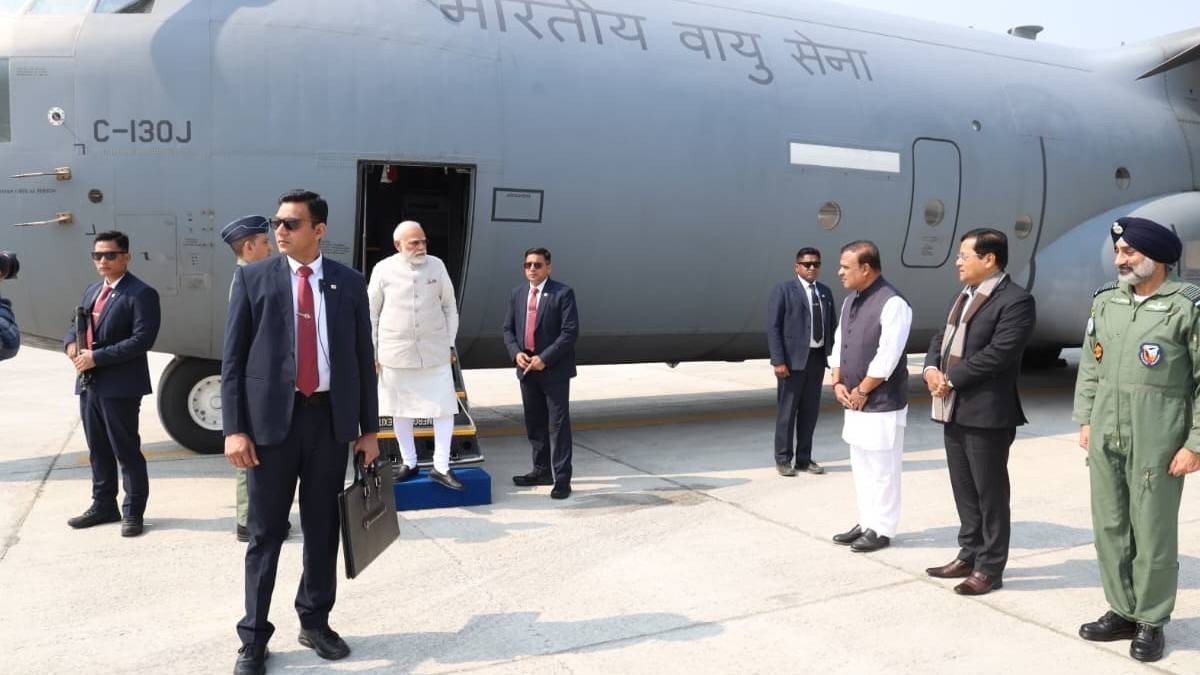
The inauguration was marked by a spectacular aerial display featuring fighter jets like Rafale, Sukhoi Su-30MKI, and Tejas, along with transport aircraft and helicopters. Modi watched alongside senior officials as the Indian Air Force demonstrated the facility’s capability to handle rapid deployments and emergency landings. The event was not just about military preparedness—it was also about reassuring citizens that infrastructure in the Northeast is being strengthened to meet both defense and disaster-response needs.
Beyond the runway, Modi unveiled projects worth ₹5,450 crore aimed at boosting connectivity and development in Assam. These include road upgrades, bridges, and regional infrastructure improvements that promise to enhance trade, tourism, and everyday life for residents. For locals, the Prime Minister’s presence and the unveiling of such large-scale projects underscored the government’s commitment to integrating the Northeast more closely with the rest of India.
What made the occasion particularly human was the way it connected national defense with everyday aspirations. While the ELF strengthens India’s eastern frontier, it also doubles as a lifeline during natural disasters, offering an alternative to Dibrugarh airport. For the people of Assam, the facility represents safety, opportunity, and pride. Modi’s landing was more than a political event—it was a moment that blended national security with local hope, reminding everyone that infrastructure is ultimately about people and their future.