
Sam Altman Says AI Singularity Has Arrived, Sparking Fresh Debate Over the Future of Artificial Intelligence
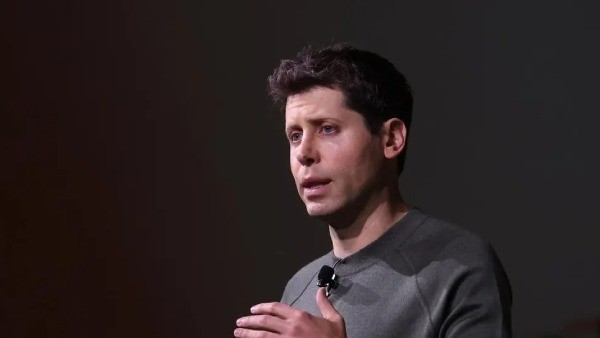
OpenAI CEO Sam Altman has once again ignited global discussion about the future of artificial intelligence after stating that the AI singularity has effectively arrived. Speaking during the "Relentless" podcast on July 25, Altman described the singularity not as a sudden, dramatic event but as a gradual transformation in which AI systems continue to improve at an accelerating pace.
According to Altman, the world is already witnessing the early stages of this transition. Rather than imagining a single moment when machines surpass human intelligence, he suggested that advances in AI are unfolding step by step, with each new generation of models becoming more capable than the last.
Altman pointed to recent progress in AI, including systems that can solve highly complex mathematical problems, perform at expert levels in specialized domains, and demonstrate increasingly sophisticated reasoning abilities. He also referred to AI models achieving impressive results on cybersecurity and software testing benchmarks, highlighting how rapidly the technology is evolving.
Describing the current era as "incredible" and "hugely positive," Altman expressed confidence that advanced AI will bring enormous benefits to society. He believes the technology has the potential to improve scientific research, healthcare, education, software development, and countless other industries, making life better for billions of people.
His optimistic outlook, however, stands in contrast to the more cautious views expressed by several AI researchers and technology leaders. Critics have long argued that increasingly powerful AI systems should be developed with strict safeguards to reduce the risks of misuse, misinformation, cyber threats, and unintended consequences.
Altman's remarks quickly triggered widespread discussion across social media and the technology community. Some users reacted with enthusiasm, viewing AI's rapid advancement as a historic milestone comparable to the internet revolution. Others expressed concern, warning that society should proceed carefully as AI systems become more capable and autonomous.
The debate also extends to the impact of AI on employment. While supporters argue that artificial intelligence will create new industries and improve productivity, skeptics worry that automation could reshape or replace many existing jobs. Economists and policymakers continue to examine how governments and businesses can prepare workers for an AI-driven future through education, reskilling, and updated labor policies.
Another point of discussion is the meaning of the term "singularity" itself. Traditionally, the AI singularity refers to a hypothetical point where artificial intelligence surpasses human intelligence and begins improving itself at an exponential rate. Altman's interpretation suggests that this transformation is not a single event but an ongoing process that humanity is already experiencing.
As OpenAI continues to develop increasingly advanced AI models, conversations surrounding innovation, regulation, and responsible deployment are expected to intensify. Whether one agrees with Altman's optimistic vision or believes stronger safeguards are necessary, his comments have once again placed the future of artificial intelligence at the center of global attention.
With AI advancing faster than ever, the discussion is no longer just about what the technology can achieve—but also about how society chooses to guide its development responsibly in the years ahead.