Donald Trump warned that “a whole civilization will die tonight,” while JD Vance declared the U.S. has nuclear “tools in our toolkit” if Iran does not change course. With both the President and Vice President threatening a strike, observers call this the most dangerous moment in human history, driven by escalating U.S. and Israel tensions with Iran.
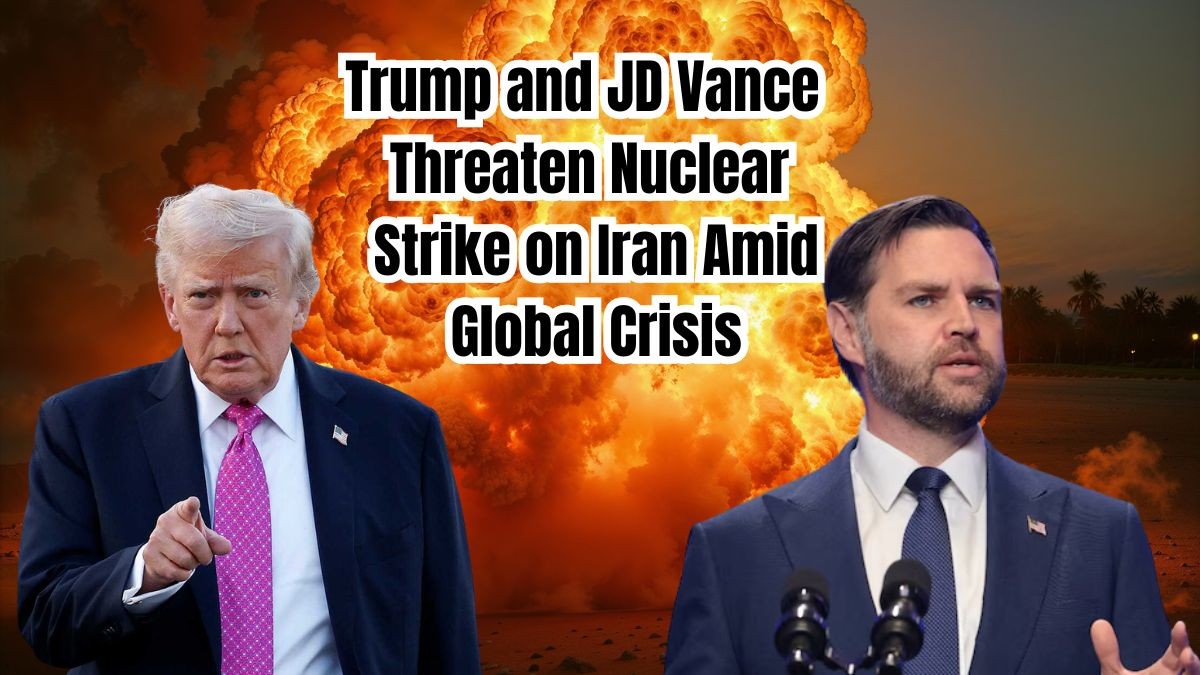
The crisis surrounding Iran has reached a perilous new height, with both President Donald Trump and Vice President JD Vance issuing stark warnings that have shaken the global community. Trump’s chilling words—“A whole civilization will die tonight, never to be brought back again. I don’t want it to happen but it probably will”—have underscored the gravity of the situation. His statement conveys both reluctance and inevitability, painting a picture of catastrophic consequences should Iran fail to comply with U.S. demands.
Vice President JD Vance reinforced the administration’s stance, declaring, “Iran has to know we’ve got tools in our toolkit that we so far haven’t decided to use. Trump can decide to use them, and he will if the Iranians don’t change course.” This remark leaves little ambiguity about the nature of those “tools,” widely interpreted as nuclear options. Together, the President and Vice President’s words have signaled that Washington is prepared to escalate to the most destructive level if Tehran resists.
The implications of these threats are staggering. A nuclear strike on Iran would not only devastate the nation but also destabilize the Middle East and reverberate across the globe. The mention of “a whole civilization” dying highlights the potential for irreversible cultural and human loss. Critics argue that such rhetoric risks pushing the world into an unprecedented crisis, one that could eclipse even the darkest moments of the Cold War. The involvement of Israel, seen as a key ally in this confrontation, further complicates the geopolitical landscape, intensifying fears of a broader regional conflict.
Observers are calling this “the most dangerous moment in human history,” pointing to the convergence of nuclear threats, regional instability, and global uncertainty. While Washington insists that Iran must change course, many voices worldwide are urging restraint and diplomacy to prevent catastrophe. The stakes could not be higher: the decisions made in the coming hours may determine whether the world steps back from the brink or plunges into a conflict with consequences too dire to imagine.