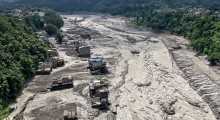
At least 95 people have died and more than 350 remain missing after devastating flash floods swept through parts of Nepal on Wednesday, August 26, 2026. The disaster struck Rasuwa district, near the Nepal-Tibet border, after the Bhotekoshi River overflowed and sent a powerful surge of water and debris through nearby villages.
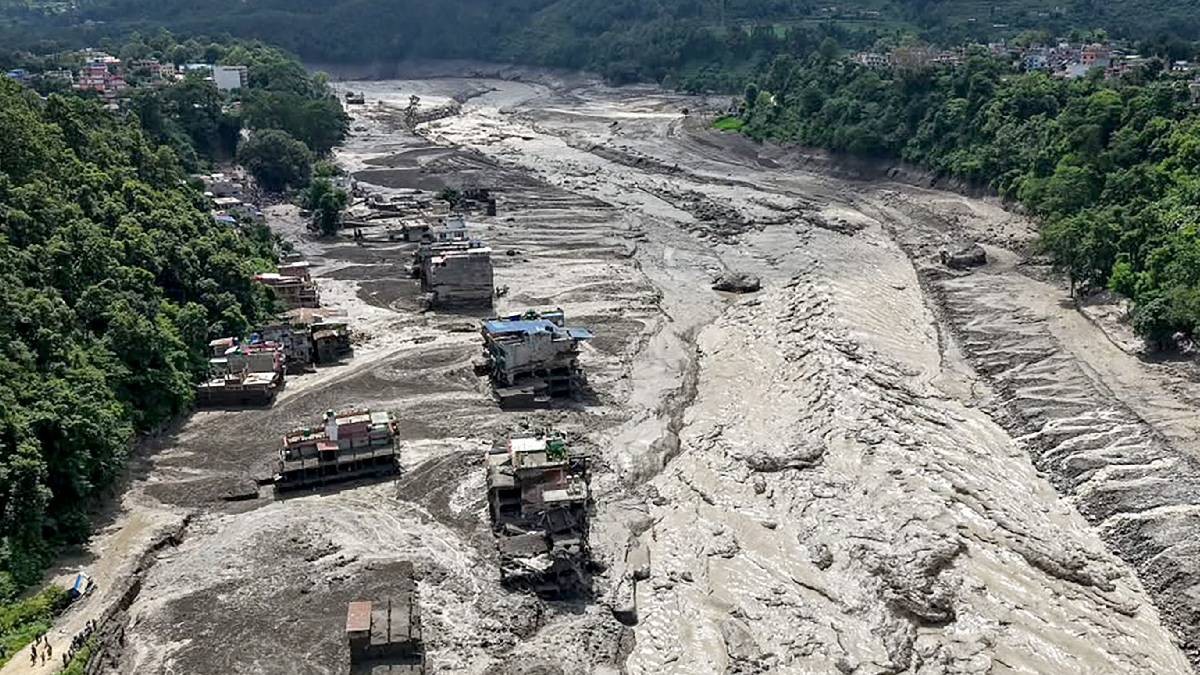
The sudden flooding caused widespread destruction, damaging homes, roads, bridges and other infrastructure. Rescue and relief operations have been launched, but difficult terrain and disrupted connectivity are making efforts to locate missing people particularly challenging.
Over 100 Indians Among Those Missing
The disaster has also raised concern in India, with the Nepal Tourism Board confirming that more than 100 Indian nationals are among those reported missing. Many Indians were believed to be travelling through the region, including people undertaking journeys toward Tibet.
The Indian Embassy in Nepal said it was in contact with relevant Nepalese authorities and was working toward the early rescue and relief of Indian nationals affected by the floods.
The embassy has also released emergency contact numbers for Indians seeking assistance or information:
+9779851316807
+9779709107500
Families in India are anxiously waiting for information about relatives who may have been caught in the disaster.
Bhotekoshi River Overflow Triggers Devastation
The flooding occurred after the Bhotekoshi River surged through settlements in Rasuwa district. The river system originates in the high Himalayan region and is connected to waterways flowing from the Tibet Autonomous Region of China.
The extreme geography of the area makes rescue operations especially difficult. The combination of steep mountain terrain, fast-flowing water and damaged transportation links has left several areas difficult to reach.
Authorities are continuing to investigate the precise chain of events that caused the catastrophic flooding. While the river's connection to Tibet has prompted questions about the origin of the disaster, its geographic origin alone does not establish that the flooding was deliberately caused by any neighbouring country.
Rescue Operations Underway
Nepalese authorities and security personnel are involved in search-and-rescue operations as the scale of the disaster becomes clearer. Teams are searching affected villages and infrastructure for survivors and missing people.
With more than 350 people still unaccounted for, the death toll could potentially rise further as rescue teams gain access to isolated areas.
The disaster has once again highlighted Nepal's vulnerability to sudden floods, landslides and other extreme events in its mountainous regions. For now, the priority remains locating survivors, rescuing those stranded and providing emergency assistance to affected communities and foreign nationals.