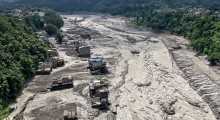
A devastating flash flood struck Nepal’s northern Rasuwa district near the Nepal–China border on August 26, 2026, sweeping away homes, roads, bridges and hydropower infrastructure. Early reports initially put the death toll at 55, with around 400 people missing, but the toll has continued to rise as rescue teams reach previously inaccessible areas. Later reports put the number of deaths at around 95 in Nepal, with hundreds still unaccounted for.
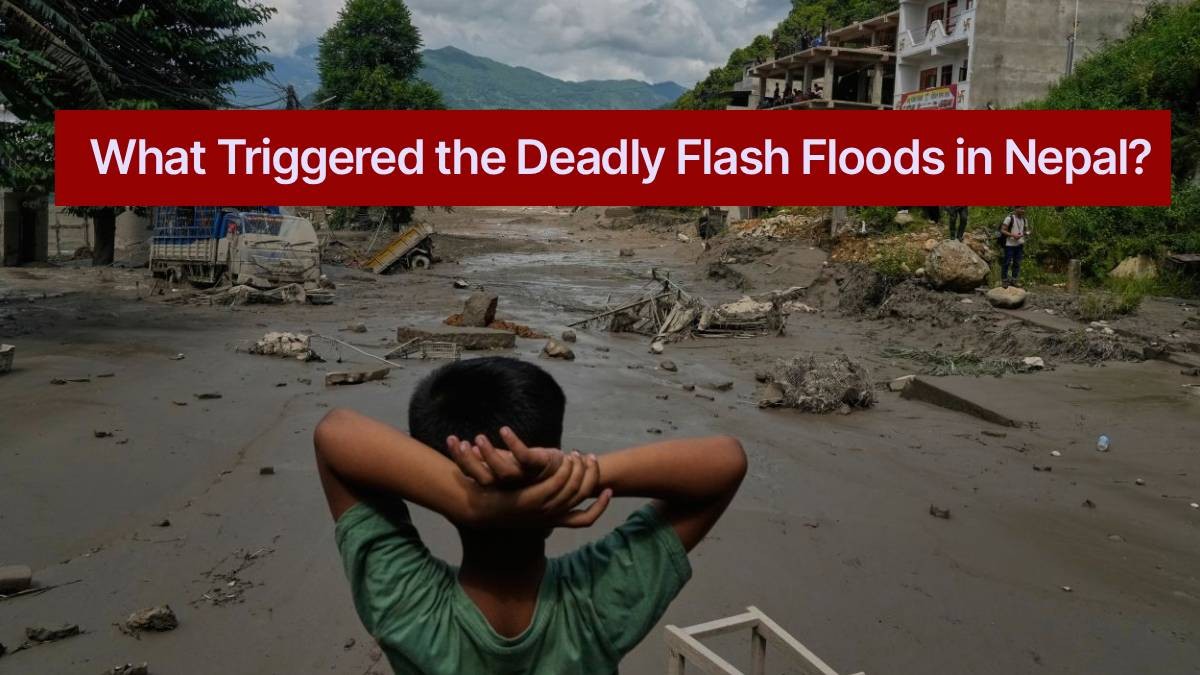
What Triggered the Flood?
The immediate trigger appears to have been a sudden collapse or avalanche of ice and rock into the Lhende Khola river system, producing a massive surge of water, mud and debris downstream. Reuters reported that the event was associated with an earthquake-induced glacial collapse, although investigations into the precise sequence of events are continuing.
A 4.4-magnitude earthquake was recorded in the region shortly before the catastrophic surge, according to the German Research Centre for Geosciences. Experts have cautioned, however, that the earthquake itself has not conclusively been established as the direct cause of the collapse.
The resulting debris appears to have temporarily blocked part of the river. When that natural blockage failed or was overtopped, an enormous volume of water and sediment rushed downstream, creating the destructive flash flood.
Why Is Tibet Being Mentioned?
The geography of the river system has raised questions because the Bhote Koshi River originates on the Tibetan Plateau, where it is known as the Poiqu River, before crossing into Nepal. The river then flows through areas including Rasuwa and connects with the wider Himalayan river network.
The disaster also hit Gyirong County in Tibet, where a mudslide caused deaths and left hundreds missing. This means the catastrophe affected communities on both sides of the Nepal-China border.
However, the fact that the river originates in Tibet does not by itself establish that China caused the flooding. Available evidence points toward a natural geological and glacial event rather than a deliberate action. Investigations are still underway to establish exactly where the collapse occurred and how the flood wave developed.
Climate Change Could Have Made the Region More Vulnerable
The disaster has also renewed concerns about the rapidly changing Himalayan environment. Rising temperatures are accelerating glacier and snow loss in many parts of the Himalayas, potentially increasing instability in high-altitude terrain and the risk associated with glacial lakes, ice avalanches and landslides.
Experts say Nepal's mountainous geography, monsoon rainfall and increasing exposure of roads, settlements and hydropower projects make the country particularly vulnerable to sudden flood events.
Hundreds Remain Missing
The flood struck areas used by tourists and pilgrims travelling toward Tibet, including people undertaking the Kailash Mansarovar pilgrimage. Nepal's tourism authorities reported hundreds of people missing, including foreign nationals and more than 100 Indians in early counts.
Rescue operations remain difficult because roads and bridges have been destroyed, communications disrupted and large quantities of mud and debris blocking access. Authorities have also warned about the possibility of another flood if an upstream blockage collapses.
Bottom line: The available evidence currently points to an ice-rock/glacial avalanche and sudden river blockage, possibly linked to seismic activity, as the trigger. Although the river originates in Tibet, there is no evidence at present that China deliberately caused the disaster. The precise geological chain of events remains under investigation.