Ranveer Singh’s subtle gesture of adding “Om” in his comment on Sara Arjun’s post has caught the attention of fans and admirers alike. It was a small but meaningful expression, reflecting a sense of pride and spirituality that resonated deeply with audiences. In today’s Bollywood landscape, where every move of a star is closely observed, such a gesture carries symbolic weight and adds to the cultural conversation around cinema and identity.
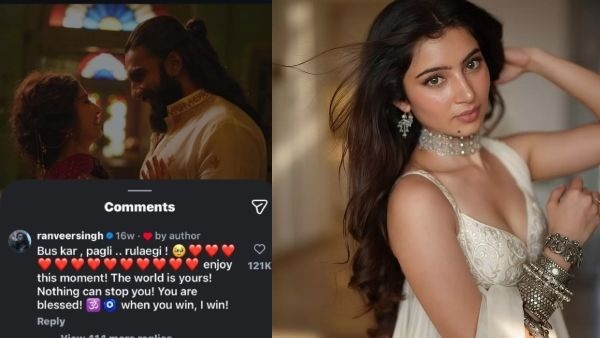
Much of this shift in tone and openness is being credited to filmmaker Aditya Dhar, who has brought a new wave of storytelling and confidence into Bollywood. His approach has encouraged actors and creators to embrace themes and expressions that were once considered sensitive or avoided. This change is being seen as a revolution in the industry, breaking away from the past where celebrities often hesitated to openly acknowledge their cultural or spiritual roots.
The contrast is striking when one recalls earlier times, when Bollywood’s relationship with power and influence was complicated, and stars were often criticized for their associations. Today, however, the industry is witnessing a transformation where pride in one’s identity and values is celebrated rather than hidden. Ranveer’s comment, though simple, is being interpreted as part of this larger cultural shift.
At the heart of this conversation is Dhurandhar, a film that many are calling a revolution in Indian cinema. Its success and the reactions surrounding it highlight how storytelling can inspire confidence, cultural pride, and a new sense of direction for Bollywood. For audiences, it feels like a turning point—one where cinema is not just entertainment but also a reflection of evolving values and a renewed sense of identity.