
India Might Soon Get Plastic Currency: Explained – A New Money Shield for the Economy
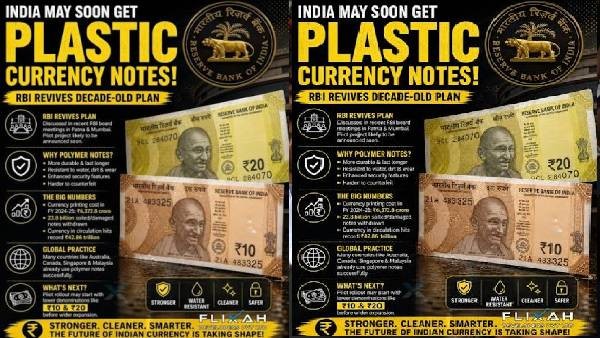
India is exploring the possibility of introducing plastic currency notes as part of its efforts to modernize the financial system and strengthen the durability of money in circulation. The Reserve Bank of India (RBI) has been studying global practices where polymer-based notes have replaced traditional paper currency, offering enhanced security features and longer shelf life. If implemented, this move could mark a significant transformation in the way Indians handle cash.
Plastic currency, also known as polymer notes, is already in use in countries like Australia, Canada, and the UK. These notes are made from a special synthetic polymer that makes them resistant to wear and tear, moisture, and counterfeiting. Unlike paper notes, which deteriorate quickly in humid climates, polymer notes can last two to three times longer, reducing replacement costs for the central bank. For India, where cash transactions remain dominant, this durability could prove to be a major advantage.
One of the key benefits of plastic currency is its enhanced security shield. Polymer notes can incorporate advanced features such as transparent windows, holograms, and complex designs that are difficult to replicate. This would help curb the menace of counterfeit currency, which has been a persistent challenge for the Indian economy. By reducing fake notes in circulation, the RBI can safeguard monetary stability and protect consumers.
Another advantage lies in the environmental aspect. Though polymer notes are not biodegradable, they can be recycled into products like building materials and plastic goods. This makes them more sustainable compared to paper notes, which require cutting down trees and frequent replacements. For a country like India, balancing economic efficiency with environmental responsibility is crucial, and plastic currency could be a step in that direction.
The introduction of plastic currency would also align India with global financial standards. As digital payments grow rapidly, cash remains an important medium for millions of citizens. Ensuring that physical currency is secure, durable, and cost-effective is essential for maintaining trust in the financial system. Experts believe that polymer notes could serve as a new shield for the economy, protecting it from both physical damage and counterfeit threats.
While the RBI has not announced a definitive timeline, discussions around pilot projects and phased rollouts are gaining momentum. If successful, India could soon witness a hybrid currency ecosystem where both digital payments and polymer notes coexist, offering citizens convenience and security