
India is preparing to launch its first tokenised corporate bond issue in September 2026, marking a significant step in the country's adoption of blockchain technology for financial markets. The pilot is expected to test whether distributed-ledger technology can make bond issuance and settlement faster and more efficient.
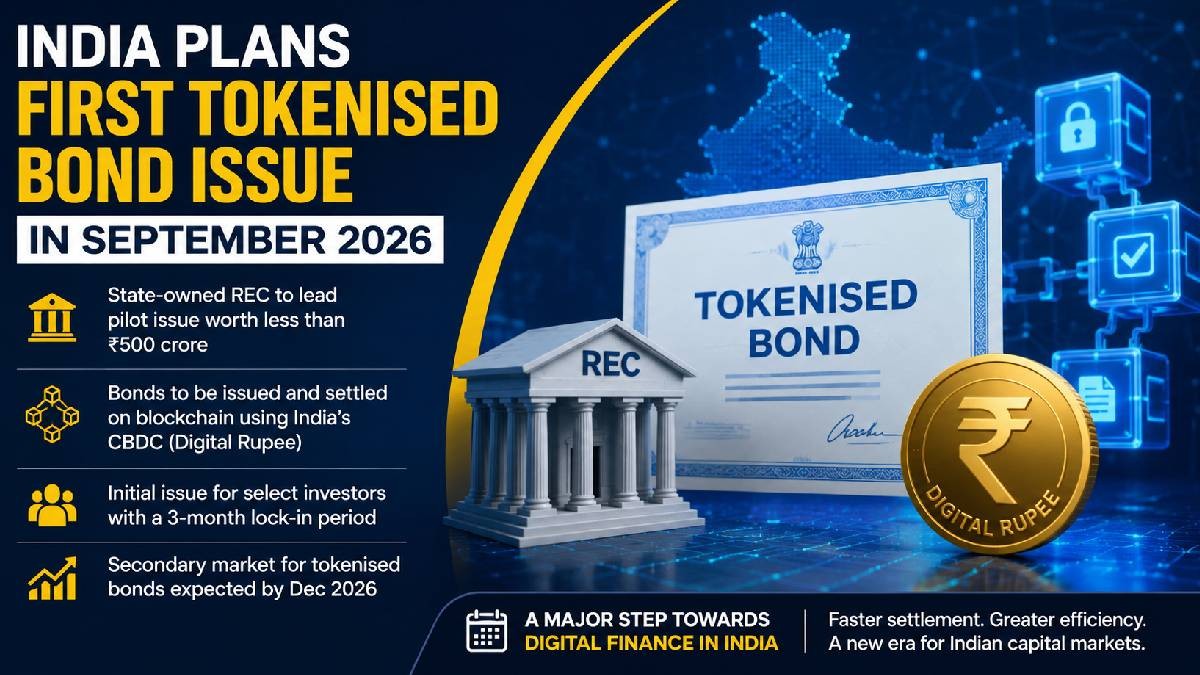
According to three people familiar with the matter cited by Reuters, state-owned power financier REC is expected to issue the tokenised bonds as part of the pilot. The proposed issue is expected to be worth less than ₹500 crore, or about $57 million. The offering is expected to be targeted at a select group of investors during its initial phase.
What Are Tokenised Bonds?
Tokenised bonds are securities whose ownership, issuance, trading and settlement are digitally recorded on a blockchain or distributed ledger. Unlike traditional systems that can involve multiple intermediaries and settlement periods, blockchain-based infrastructure can potentially allow transactions to be completed almost instantly.
India's proposed pilot is therefore significant because it could demonstrate how blockchain technology can be integrated into the country's established debt-market infrastructure.
REC Tokenised Bond Issue
REC, a state-owned power financier, is expected to become the first issuer under the proposed tokenised corporate bond pilot. The bonds will reportedly be purchased using India's central bank digital currency (CBDC), adding another important component to the country's digital-finance ecosystem.
The project is being developed with involvement from India's central bank and markets regulator, according to sources cited by Reuters. However, the Reserve Bank of India, market regulator and REC had not publicly confirmed the details at the time of the reports.
How Will Investors Buy the Bonds?
The proposed framework is expected to require participating investors to use two digital accounts. One would be a wholesale CBDC wallet provided through a bank, while the other would be a new electronic securities wallet.
Indian depositories are reportedly developing an electronic securities wallet known as DEMAT 2.0, which would record bond holdings using distributed-ledger technology. Subsequent trades could be restricted to participants holding compatible CBDC and securities wallets.
The initial tokenised bonds are expected to have a three-month lock-in period. A secondary market for the securities could potentially be developed by exchanges by December 2026. The bonds are also expected to remain outside conventional electronic bond-trading platforms during the pilot.
Why India Is Testing Tokenised Bonds
The pilot could help India evaluate whether blockchain-based settlement can reduce transaction times and improve efficiency in the corporate bond market. It also represents a practical test of how the digital rupee and tokenised securities can work together.
If successful, the September pilot could provide a foundation for broader adoption of tokenised financial assets in India. For now, however, the initiative remains a limited pilot, with participation expected to be restricted to selected investors.
The proposed REC issue could therefore become an important milestone in India's efforts to modernise its financial-market infrastructure using blockchain and digital currency technology.