
Huawei’s MateBook Fold is more than just another entry in the crowded laptop market—it’s a provocation. For decades, the keyboard has been the anchor of personal computing. Every design decision, from clamshell form factors to trackpads, has revolved around typing as the primary mode of interaction. Huawei’s new device challenges that assumption head-on, asking what happens when the keyboard is no longer the default.
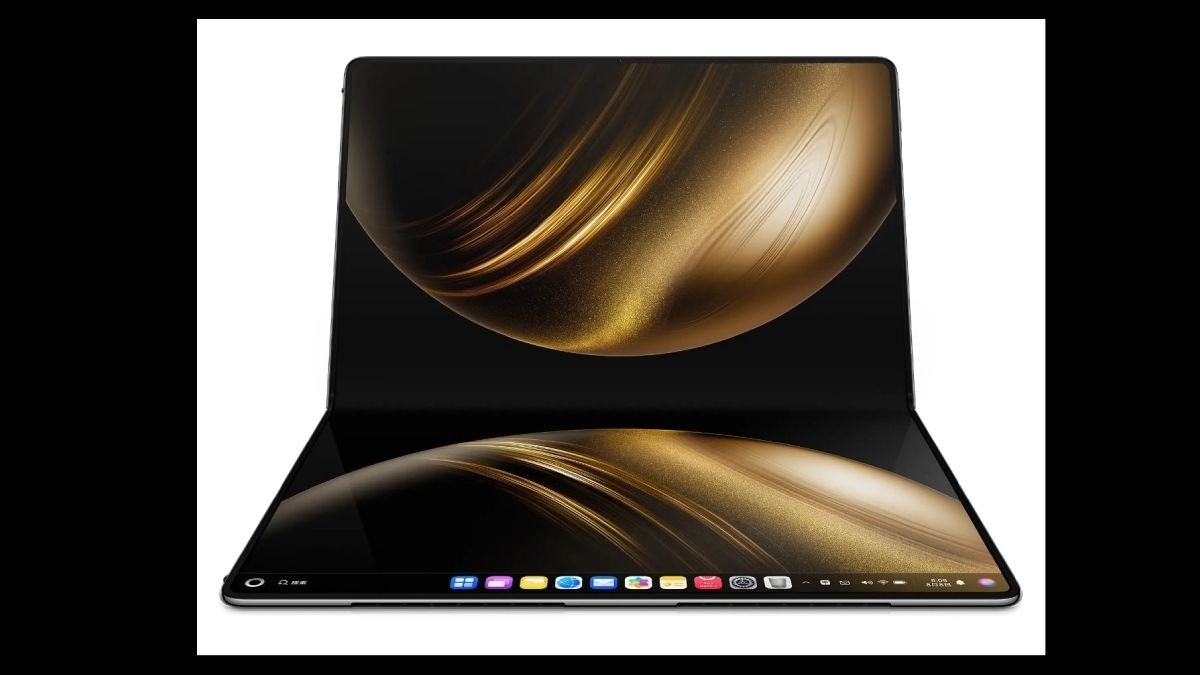
The MateBook Fold is built around its screen, not its keys. At 18.3 inches, the OLED display dominates the experience, folding neatly down to 13 inches for portability. The specs are impressive: a 3.3K dual-layer OLED with 1600 nits brightness, powered by the Kirin X90 chip, 32GB of RAM, and up to 2TB of storage. Despite its size, it weighs just 1.16kg and measures only 7.3mm thin when unfolded. HarmonyOS 5, Wi-Fi 7, six speakers, and an 8MP camera round out the package. The absence of a built-in keyboard is not a limitation—it’s a deliberate design choice. A virtual keyboard exists when needed, a Bluetooth keyboard can be paired, but the real emphasis is on touch, voice, and AI-driven interaction.
This signals a profound shift. If the keyboard is no longer central, then the very definition of a computer begins to change. Instead of being typing machines, computers become fluid canvases—devices that adapt to context, whether that’s productivity, creativity, or communication. The MateBook Fold is part laptop, part tablet, part display, and part experiment in what comes next. It suggests a future where interaction is multimodal, where typing is just one option among many, and where AI augments input in ways that make traditional hardware less necessary.
The implications are enormous. Companies that embrace this transition will not just release new products—they will redefine personal computing itself. Just as the smartphone reshaped communication by moving beyond buttons, foldable laptops without built-in keyboards could reshape computing by moving beyond typing. Huawei’s MateBook Fold is not a gimmick; it’s a test case for a post-keyboard era. And if history is any guide, the firms that master this shift will move faster than most people expect, leaving behind those still clinging to the old paradigm.