
OpenAI has unveiled GPT-Live, a new voice-first AI experience aimed at making conversations with ChatGPT more natural, fluid, and interactive. The feature is designed to let users speak with the AI in real time, allowing for seamless back-and-forth discussions that feel closer to a human conversation than traditional text-based interactions.
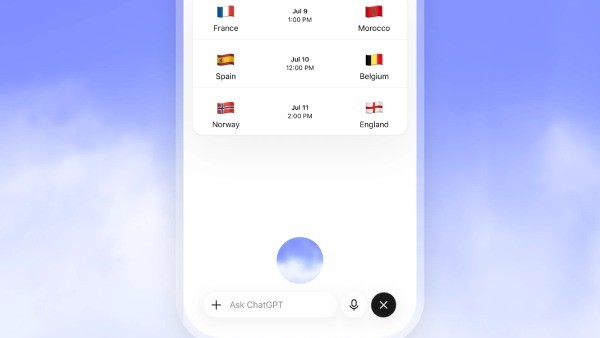
GPT-Live represents another step in the rapid evolution of conversational AI. Instead of typing prompts and waiting for written responses, users can communicate using their voice, ask follow-up questions naturally, interrupt when needed, and receive spoken replies almost instantly. The result is a more dynamic and engaging way to interact with artificial intelligence.
One of GPT-Live's key highlights is its ability to maintain conversational context throughout an ongoing discussion. Users can change topics, ask for clarifications, or build on previous questions without repeatedly restating information. This makes it especially useful for brainstorming ideas, learning new concepts, practicing languages, preparing for interviews, or getting assistance while multitasking.
The voice experience has been designed to feel more responsive than earlier voice assistants. GPT-Live can react to pauses, conversational cues, and interruptions, making interactions smoother and reducing the rigid question-and-answer pattern commonly associated with traditional voice assistants.
The feature is expected to support a wide range of everyday use cases. Students can use it as a learning companion, professionals can brainstorm presentations or summarize information, travelers can receive real-time assistance, and users can simply have natural conversations to explore ideas or seek recommendations. Because communication happens through speech, GPT-Live is particularly convenient for situations where typing is impractical, such as driving, cooking, or walking.
OpenAI has also emphasized user control and safety while developing its voice capabilities. Users can choose when to activate voice interactions and remain in control of their conversations. The company continues to invest in safeguards designed to make AI interactions reliable, transparent, and aligned with responsible AI practices.
GPT-Live builds on OpenAI's broader efforts to create multimodal AI systems capable of understanding and responding through text, voice, and other forms of input. As AI becomes more integrated into everyday life, voice-based interaction is expected to play a major role in making these systems more accessible and intuitive for a wider audience.
The introduction of GPT-Live also reflects increasing competition in the AI industry, with technology companies racing to develop advanced voice assistants that can understand context, hold longer conversations, and provide faster, more personalized responses. OpenAI's latest offering aims to distinguish itself through natural dialogue, contextual understanding, and real-time responsiveness.
As voice AI continues to evolve, GPT-Live has the potential to transform how people interact with artificial intelligence. By combining conversational intelligence with real-time speech capabilities, OpenAI is moving closer to its vision of AI assistants that feel less like software tools and more like collaborative partners capable of helping users in their daily lives.