
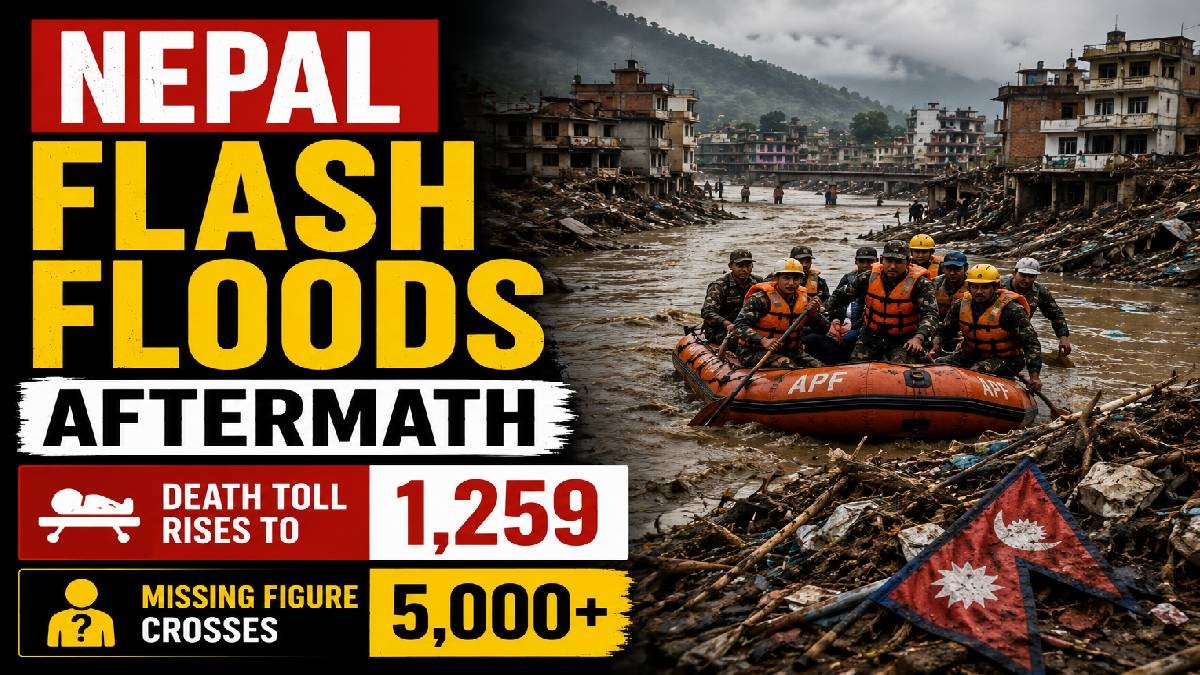
Nepal is facing a devastating humanitarian crisis after catastrophic flash floods swept through parts of the country, with the reported death toll rising to 1,259 on Thursday, September 3, 2026. More than 5,000 people are reported missing, although casualty figures continue to change as rescue teams reach isolated areas and authorities identify recovered bodies.
The disaster has left families across Nepal desperately searching for relatives. At hospitals in Kathmandu, authorities have created a "wall of the missing" displaying photographs and information about people who remain unaccounted for.
Families Hold Symbolic Funerals
With thousands still missing and many bodies yet to be recovered, some families have begun holding symbolic funerals. At Kathmandu's Pashupatinath Temple, relatives have performed ceremonies using straw effigies for loved ones whose bodies could not be found.
The emotional rituals reflect the growing desperation among families who have spent days waiting for information. Some relatives continue visiting hospitals and identification centres in the hope that missing family members may still be found alive.
Rescue Operations Continue
Search-and-rescue operations remain underway across the worst-hit regions. Difficult terrain, destroyed roads, damaged bridges and large quantities of mud and debris have made access particularly challenging.
A major focus is the search for workers believed to be trapped inside hydroelectric facilities. Reuters reported that around 900 people were feared trapped in hydropower plants, adding another urgent dimension to the rescue effort.
International assistance is also continuing. India has dispatched another tranche of relief supplies to Nepal, with the latest shipment consisting of more than 21 tonnes of essential supplies. India has previously sent medical personnel and technical teams to assist with rescue and relief operations.
Disaster Linked to Glacier Collapse
The catastrophic flooding followed a glacier collapse in the Himalayan region on August 26, triggering a massive surge of water and debris downstream. The resulting floods devastated communities, damaged roads and bridges and severely disrupted communication and transportation networks.
Experts and officials have also raised concerns about the growing vulnerability of Himalayan communities and infrastructure to climate-related hazards. Reuters reported that Nepal's Prime Minister Balendra Shah has highlighted the disaster as a warning about the region's exposure to climate change.
Nepal Faces Long Recovery
Beyond the immediate search for survivors, Nepal faces a lengthy recovery process. Thousands of displaced people require food, clean water, medicines and shelter, while damaged roads, bridges and power infrastructure will need to be rebuilt.
The rapidly changing death and missing-person figures underline the scale of the catastrophe. As rescue teams continue searching through flooded areas and damaged infrastructure, families remain hopeful that some of those still missing can be brought home safely.
For Nepal, the disaster has become one of the country's most severe recent humanitarian emergencies, with rescue, identification and relief efforts expected to continue for weeks.