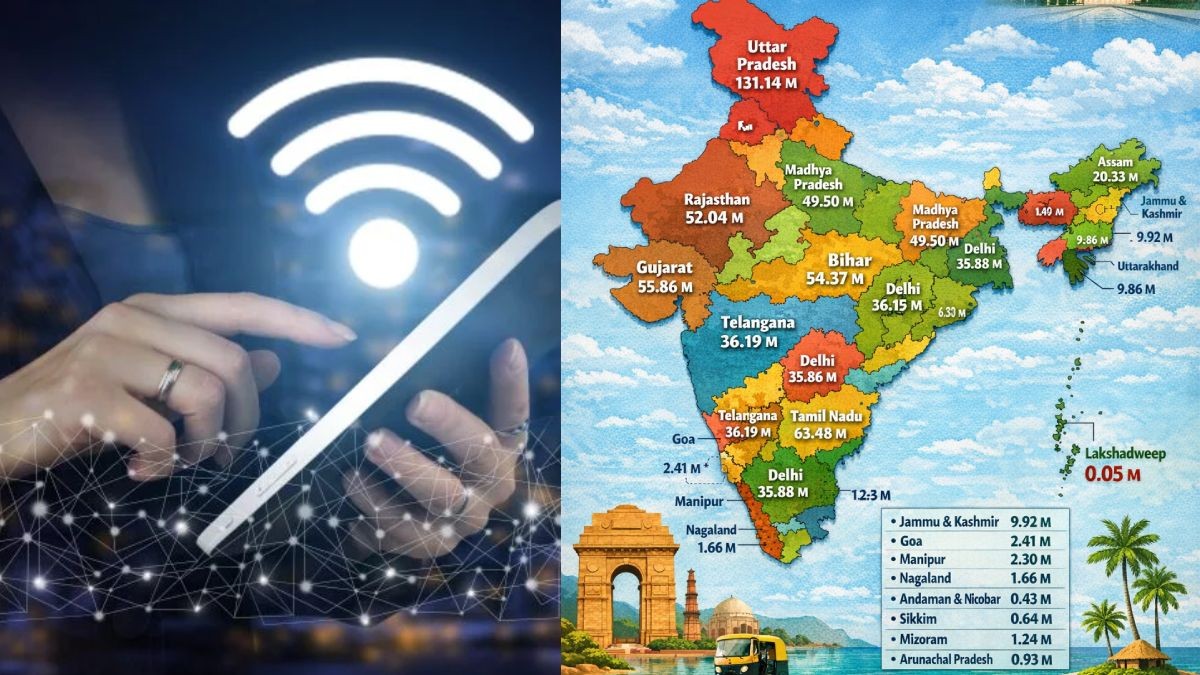
India’s internet landscape reflects both its vast population and regional diversity. Uttar Pradesh leads with 131 million users, followed by Maharashtra at 109 million, highlighting their dominance in digital adoption. Southern states like Tamil Nadu, Karnataka, and Kerala show strong connectivity, driven by literacy and infrastructure. Smaller states and union territories, such as Lakshadweep and Sikkim, have comparatively fewer users, underscoring the digital divide. Urban hubs like Delhi and Bengaluru contribute significantly to online growth, while rural regions are steadily catching up due to affordable mobile data. Overall, India’s state-wise distribution showcases rapid expansion and the challenges of equitable digital access.
Indian Top Cities Internet Users - 2026
-
Uttar Pradesh – 131.14 million Uttar Pradesh leads the nation with over 131 million internet users, reflecting its massive population and growing digital adoption. The state’s expanding smartphone penetration and affordable data plans have fueled this surge, making it India’s largest digital consumer base and a key driver of online growth.
State-Wise Internet Users in India 2026: Digital Adoption Across Regions -
Maharashtra – 109.46 million Maharashtra ranks second with nearly 110 million users, driven by urban hubs like Mumbai and Pune. Strong infrastructure, tech-savvy populations, and widespread broadband access have contributed to its digital dominance. The state’s diverse economy and cultural influence make it a significant contributor to India’s online ecosystem.
-
West Bengal – 63.75 million West Bengal has over 63 million users, showcasing steady growth in internet adoption. Kolkata and other urban centers lead the way, while rural areas are catching up due to affordable mobile data. The state’s digital expansion supports e-commerce, education, and entertainment industries, strengthening its online presence.
-
Tamil Nadu – 63.48 million Tamil Nadu closely follows with 63.48 million users, reflecting its strong IT sector and high literacy rates. Cities like Chennai are digital hubs, while rural regions benefit from government initiatives promoting connectivity. The state’s vibrant film and cultural industries also thrive on digital platforms, boosting user engagement.
-
Karnataka – 60.30 million Karnataka, home to Bengaluru—the tech capital of India—has over 60 million internet users. The state’s thriving IT industry and startup ecosystem drive digital adoption. High smartphone usage and strong broadband infrastructure ensure widespread connectivity, making Karnataka a leader in India’s digital transformation and innovation landscape.
All india Internet users - Data 2026
Uttar Pradesh – 131.14 million
Maharashtra – 109.46 million
West Bengal – 63.75 million
Tamil Nadu – 63.48 million
Karnataka – 60.30 million
Gujarat – 55.86 million
Bihar – 54.37 million
Rajasthan – 52.04 million
Madhya Pradesh – 49.50 million
Andhra Pradesh – 36.47 million
Telangana – 36.19 million
Kerala – 36.06 million
Delhi – 35.88 million
Haryana – 30.14 million
Punjab – 27.19 million
Odisha – 25.89 million
Assam – 20.33 million
Jharkhand – 19.37 million
Chhattisgarh – 17.51 million
Jammu & Kashmir – 9.92 million
Uttarakhand – 9.86 million
Himachal Pradesh – 6.67 million
Goa – 2.41 million
Manipur – 2.30 million
Tripura – 2.19 million
Meghalaya – 2.08 million
Nagaland – 1.66 million
Chandigarh – 1.39 million
Mizoram – 1.24 million
Puducherry – 1.15 million
Arunachal Pradesh – 0.93 million
Dadra & Nagar Haveli – 0.84 million
Sikkim – 0.64 million
Ladakh – 0.43 million
Andaman & Nicobar Islands – 0.43 million
Lakshadweep – 0.05 million
Key Insights for Internet Users 2026
-
Uttar Pradesh leads with over 131 million users, reflecting its large population base.
-
Maharashtra follows closely, crossing 109 million.
-
Smaller states and union territories like Lakshadweep and Sikkim have comparatively fewer users, highlighting the digital divide.
-
Southern states such as Tamil Nadu, Karnataka, and Kerala show strong adoption, reinforcing their reputation as digitally progressive regions.
This distribution underscores India’s diverse digital footprint, where populous states dominate user numbers, while smaller regions continue to expand connectivity.