
The Supreme Court of India has delivered a landmark judgment declaring that the right to walk on footpaths is a fundamental right. This ruling places pedestrian safety and convenience at the heart of urban planning, recognizing walking as an essential aspect of both the right to life under Article 21 and the right to free movement under Article 19(1)(d) of the Constitution.
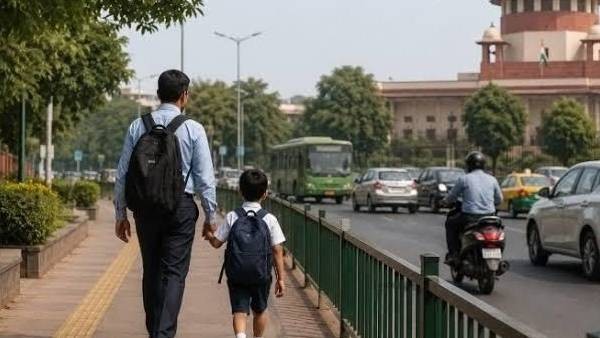
In its decision, the Court emphasized that pedestrians must be given priority over motorized vehicles, as walking is the most basic and universal mode of transport. The judgment makes it a binding duty for municipal corporations, urban development authorities, municipalities, and panchayats to construct, demarcate, and maintain footpaths wherever roads exist. This ensures that citizens can move safely and freely without obstruction.
The case arose from a tragic incident involving the death of a five-year-old boy who was struck by a tanker while walking to school. The Court observed that the absence of safe footpaths is not just an administrative lapse but a civilizational problem, reflecting decades of neglect in urban infrastructure that prioritized vehicles over pedestrians.
The ruling also clarified that citizens whose rights are violated can seek constitutional remedies, restitution, and compensation, independent of claims under the Motor Vehicles Act. This strengthens the legal framework for protecting pedestrian rights and holds authorities accountable for failing to provide safe pathways.
Beyond individual cases, the judgment has wide-ranging implications. It is expected to reshape urban planning policies, reduce pedestrian fatalities—which have surged dramatically in recent years—and encourage the Union Government to enact a dedicated law and regulatory body to enforce pedestrian rights nationwide.
By elevating walking from a civic amenity to a constitutional guarantee, the Supreme Court has ensured that every citizen has the right to safe, unobstructed footpaths. This ruling is a decisive step toward making Indian cities more inclusive, safe, and people-centric.