
Nearly three decades after its release, Deepa Mehta’s 1947: Earth continues to be remembered as one of the most disturbing and uncompromising films about the Partition of India. Released in 1998, the Indo-Canadian period drama stars Aamir Khan, Nandita Das, Rahul Khanna and Maia Sethna and explores how communal hatred destroys friendships, relationships and ordinary lives.
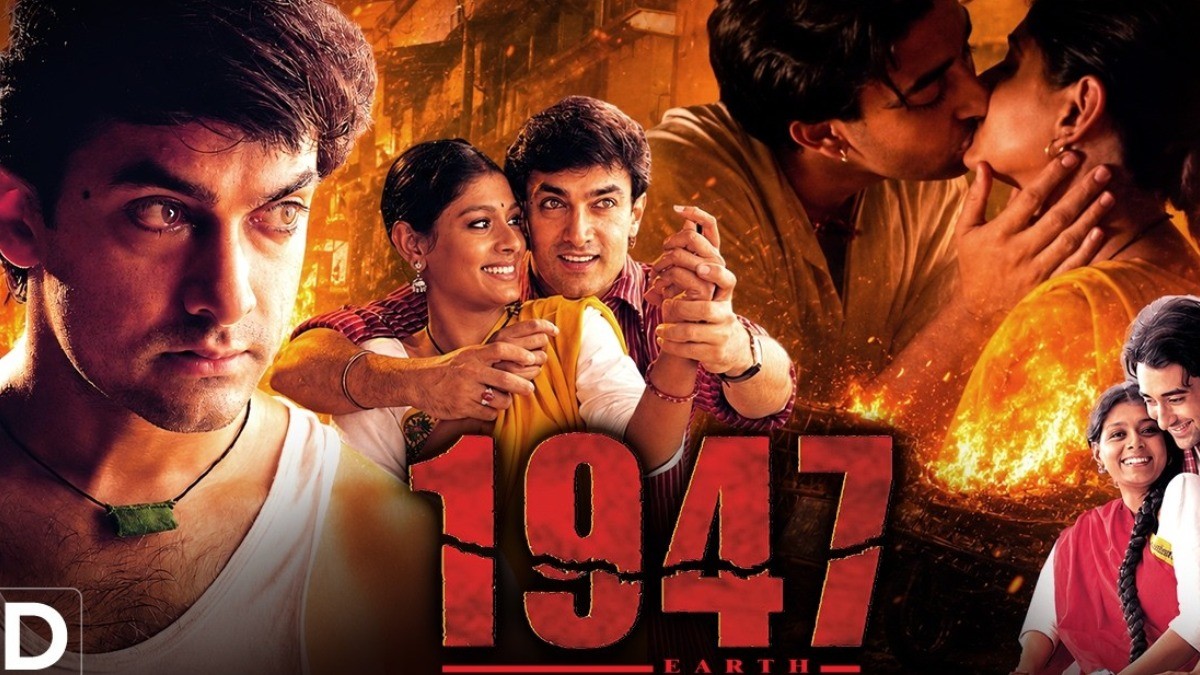
Set in Lahore in 1947, the film tells the story through the eyes of Lenny, a young Parsi girl played by Maia Sethna. Her family attempts to remain detached from the growing political and religious tensions around them. Lenny's beloved Ayah, Shanta, played by Nandita Das, is at the centre of a complicated relationship involving Dil Nawaz, portrayed by Aamir Khan, and Hassan, played by Rahul Khanna. As Partition approaches, the peaceful social world around them gradually begins to collapse.
What makes 1947: Earth particularly difficult to watch is its portrayal of communal violence. Rather than treating Partition simply as a historical event, Deepa Mehta shows its impact on individuals and communities. The film contains disturbing sequences involving massacres, refugees, religious hatred and violence against women. Academic analyses of the film have particularly highlighted its depiction of gender-based violence and the devastating consequences of communal fanaticism.
One of the film's most shocking moments involves a train arriving with massacred refugees. The discovery becomes a turning point for Aamir Khan's character, Dil Nawaz. His grief and anger gradually transform him from a friendly and affectionate man into someone consumed by hatred. Aamir's performance captures this transformation with an intensity that remains one of the film's most powerful elements.
The film's climax is equally devastating. Lenny inadvertently reveals Shanta's hiding place to an angry mob, leading to one of the most heartbreaking sequences in the story. The tragedy demonstrates how the violence of Partition affected women particularly severely, with abduction and sexual violence becoming part of the broader brutality experienced during the upheaval.
Interestingly, 1947: Earth was not originally intended to be made exactly in its final form. Deepa Mehta adapted the film from Bapsi Sidhwa's novel Ice Candy Man, later published as Cracking India. The movie became the second instalment of Mehta's Elements trilogy, following Fire and preceding Water. It was also selected as India's entry for the 1999 Academy Awards in the Best Foreign Language Film category.
The film also faced controversy. Reports note that India's censor board ordered several cuts, while the movie was banned in Pakistan. One of the deleted portions involved an intimate scene.
Today, 1947: Earth remains notable not merely because of its violence but because of the way that violence is connected to the breakdown of trust and humanity. Its depiction of Partition is painful, personal and deeply unsettling. For many viewers, the film remains one of the strongest cinematic portrayals of the human cost of the India-Pakistan Partition.