
The Government of India has approved nationwide field trials for 1 billion polymer ₹10 notes and 1 billion polymer ₹20 notes, marking a significant step toward exploring more durable currency for everyday use. The initiative will allow the Reserve Bank of India (RBI) to evaluate how polymer banknotes perform under real-world conditions across the country's diverse climates and usage patterns.
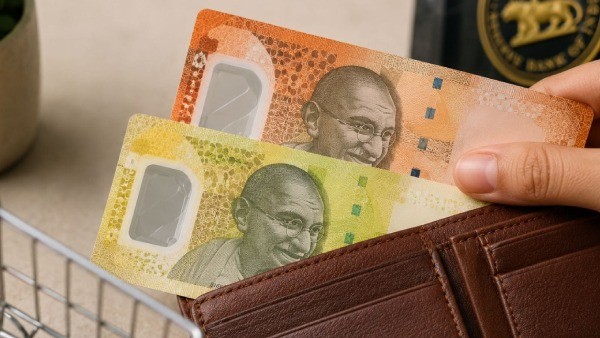
Polymer banknotes are made from a synthetic material instead of traditional cotton-based paper. They are designed to be more resistant to water, dirt, moisture, and tearing, making them significantly more durable than conventional banknotes. Experts estimate that polymer notes can last two to four times longer than paper currency, reducing the need for frequent replacements.
The move comes as the cost of printing and replacing worn-out banknotes continues to rise. According to official figures, India's currency printing expenditure exceeded ₹6,300 crore in the last financial year. By extending the lifespan of low-denomination notes, authorities hope to lower long-term production and replacement costs while improving the quality of currency in circulation.
This is not India's first attempt at polymer currency. In 2012, the RBI conducted a limited pilot project using polymer notes in select locations. However, the experiment faced several challenges, including notes sticking together in humid conditions and compatibility issues with some ATMs and currency-counting machines. As a result, the initiative did not move beyond the pilot stage.
Advances in polymer technology over the past decade have prompted authorities to revisit the concept. Modern polymer banknotes used in countries such as Australia, Canada, the United Kingdom, and New Zealand have demonstrated improved durability, enhanced security features, and better resistance to counterfeiting.
The upcoming nationwide trials will assess how the new ₹10 and ₹20 polymer notes withstand India's varied environmental conditions—from humid coastal regions to dry deserts and colder northern states. The RBI will also evaluate their compatibility with ATMs, vending machines, cash-handling equipment, and everyday public usage before deciding whether to introduce them on a larger scale.
Importantly, existing paper ₹10 and ₹20 notes will continue to remain legal tender and circulate alongside the polymer notes during the trial period. The field tests are intended to gather comprehensive data rather than signal an immediate replacement of current currency.
If the trials prove successful, India could gradually adopt polymer banknotes for select denominations, joining several countries that have already transitioned to longer-lasting synthetic currency. Such a move could improve currency quality, reduce maintenance costs, and strengthen the security of India's banknote system.
For now, the RBI's extensive field testing will determine whether polymer banknotes are suitable for nationwide circulation and capable of meeting the demands of India's vast and diverse economy.