
Indian technology professionals working in the US could face greater uncertainty after the White House completed its review of a Department of Homeland Security proposal to eliminate the 60-day grace period available to certain foreign workers after losing their jobs. The proposal has cleared regulatory review but is not yet a final rule.
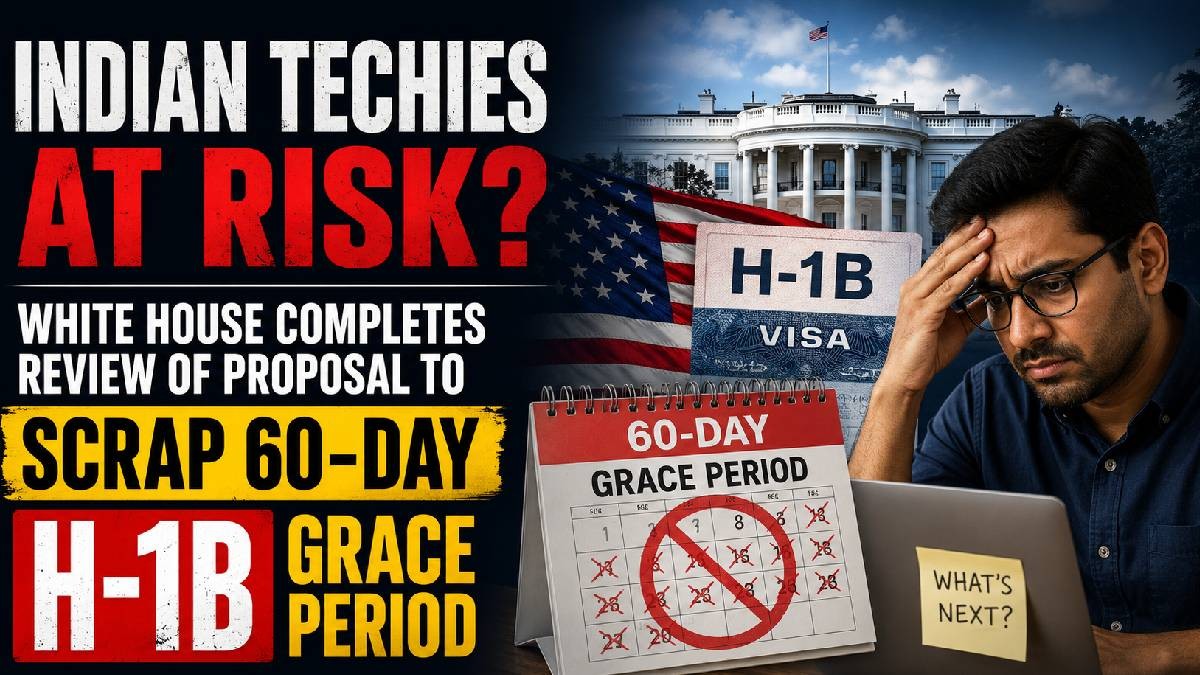
The DHS proposal, identified as RIN 1615-AD22, seeks to remove the window that currently allows eligible nonimmigrant workers to remain in the US temporarily after employment ends while looking for another job, changing immigration status or arranging their departure. The proposal cleared review by the Office of Information and Regulatory Affairs on Thursday.
What Is the H-1B 60-Day Grace Period?
The 60-day grace period was introduced in 2017. Under the current framework, eligible workers can generally remain in the US for up to 60 days after their employment ends, or until their authorised stay expires, whichever comes first.
The provision is particularly important for H-1B workers who are suddenly laid off because it gives them time to find another sponsoring employer and complete the necessary immigration procedures.
The rule also covers several other nonimmigrant categories, including E-1, E-2, E-3, H-1B1, L-1, O-1 and TN, along with eligible dependents.
Why Indian Tech Workers Could Be Hit
The proposal is attracting particular attention in India because Indian professionals account for the largest share of H-1B beneficiaries. Indians represented approximately 71% of successful H-1B applicants in fiscal 2024, according to data cited in reports.
If the grace period is eliminated, an H-1B employee who loses their job could face pressure to leave the US almost immediately rather than having two months to secure a new position.
That could create significant challenges for workers and their families, particularly those with children in American schools, housing leases and other long-term commitments.
Proposal Still Needs to Go Through Rulemaking
Despite the headline-making development, the 60-day grace period has not been eliminated yet.
The proposal is expected to be published in the Federal Register, after which the public will generally have an opportunity to submit comments. Reports indicate the comment period could last roughly 30 to 60 days. The precise provisions will only become clear once the proposed regulation is officially published.
The DHS also retains discretion under the existing framework to shorten or deny the grace period in certain circumstances, although immigration consultants say that authority has rarely been used.
Another Challenge for H-1B Holders
The proposed change comes amid a wider Trump administration push to tighten the H-1B programme. The administration has also proposed a $103,265 fee for certain new H-1B petitions, adding to concerns among employers and foreign professionals.
For Indian tech professionals, the potential removal of the grace period could therefore become another major factor when assessing employment security and long-term plans in the US.
For now, however, no immediate change has taken effect. The proposal must proceed through the federal rulemaking process before any new requirement can become effective.