
Meta is set to pay approximately $18 billion to settle a major US lawsuit, bringing one of the most closely watched legal battles involving the social media giant closer to an end. The settlement is significant not only because of its size, but also because of the potential changes it could bring to how social media platforms handle teenagers, online safety and user controls.
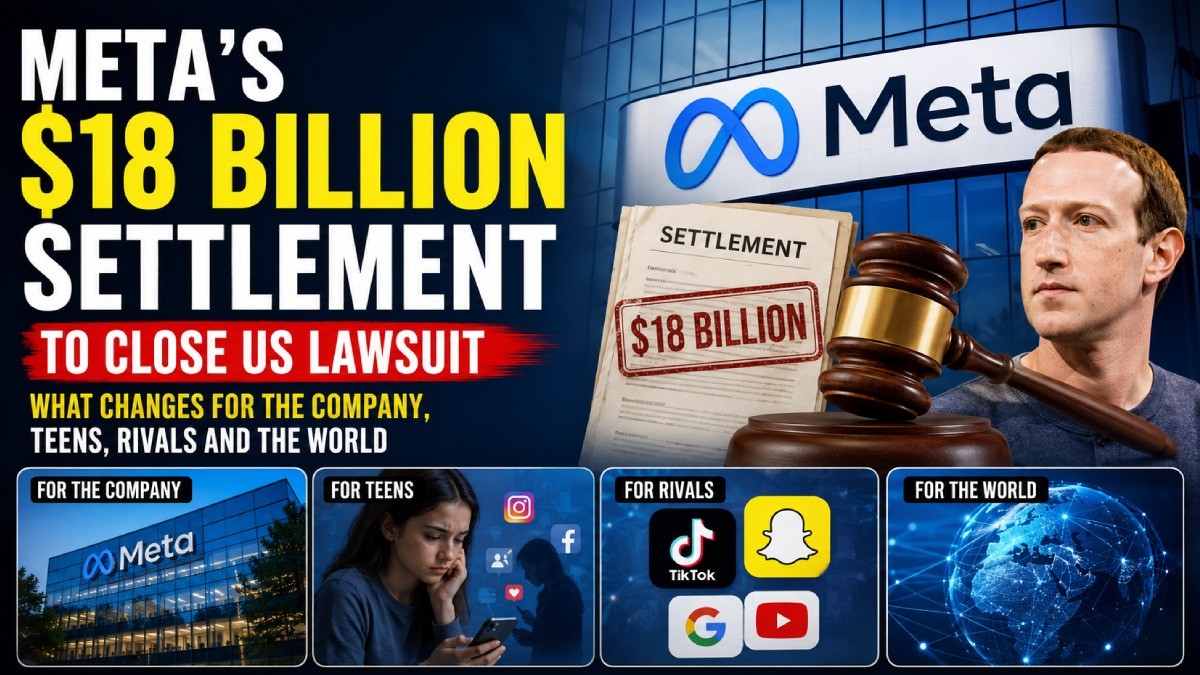
Despite the enormous headline figure, the payment represents less than 1% of Meta’s annual revenue. The company is also not admitting wrongdoing as part of the settlement.
What Does the Meta Settlement Mean?
The agreement is expected to resolve allegations surrounding Meta's impact on young users and the way its platforms, including Facebook and Instagram, have been designed and operated.
For Meta, the settlement removes a major legal uncertainty and allows the company to focus on its core businesses, including artificial intelligence, digital advertising and its social media platforms.
Importantly, Meta's agreement to pay the settlement does not amount to an admission that it violated the law. The company continues to dispute the allegations.
While $18 billion sounds enormous, Meta's massive advertising business means the financial impact is relatively limited when compared with its annual revenue. The company therefore faces a much smaller direct financial burden than the headline number might suggest.
New Controls for Teen Users
One of the most important consequences could be changes to the experience of teenagers using Meta's platforms.
The company is expected to introduce or strengthen controls designed to give young users and their parents greater control over how social media is used.
Potential measures include improved parental controls, restrictions around certain types of content and stronger protections intended to reduce harmful interactions involving minors.
The changes reflect growing concerns worldwide about the relationship between social media use and teenagers' mental health, online safety, privacy and exposure to potentially harmful content.
TikTok and YouTube Could Face Pressure
The consequences of the Meta settlement could extend beyond Facebook and Instagram.
Rival platforms such as TikTok and YouTube are likely to face increased pressure from lawmakers, regulators and parents to adopt comparable safeguards for teenage users.
If Meta's new controls become an industry benchmark, competitors could find themselves under pressure to demonstrate that their own platforms provide similar levels of protection.
This could eventually result in broader changes across the social media industry, particularly regarding age verification, recommendation algorithms, parental controls and default settings for young users.
A Global Impact
Although the lawsuit is taking place in the United States, the potential consequences could reach users around the world.
Social media companies increasingly operate globally, meaning changes introduced for US users can eventually influence product design and safety standards in other countries.
The settlement could therefore contribute to a wider shift toward greater regulation and accountability for technology companies, particularly when their products are used by children and teenagers.
What Comes Next for Meta?
For Meta, the settlement provides an opportunity to move beyond a major legal dispute while continuing to invest heavily in AI, advertising technology and its social platforms.
However, the company's regulatory challenges are unlikely to disappear. Governments worldwide continue to examine issues including privacy, competition, misinformation, online safety and the impact of social media on younger users.
The $18-billion settlement may therefore close one major chapter for Meta, but it is unlikely to be the final word on how large technology platforms should operate in an increasingly regulated digital world.