
Bengaluru, India’s tech capital, has once again earned the dubious distinction of being the country’s most congested city. According to the latest traffic analysis, commuters in Bengaluru spend an average of 36 minutes to travel just 10 kilometers, making it the slowest city commute in India.
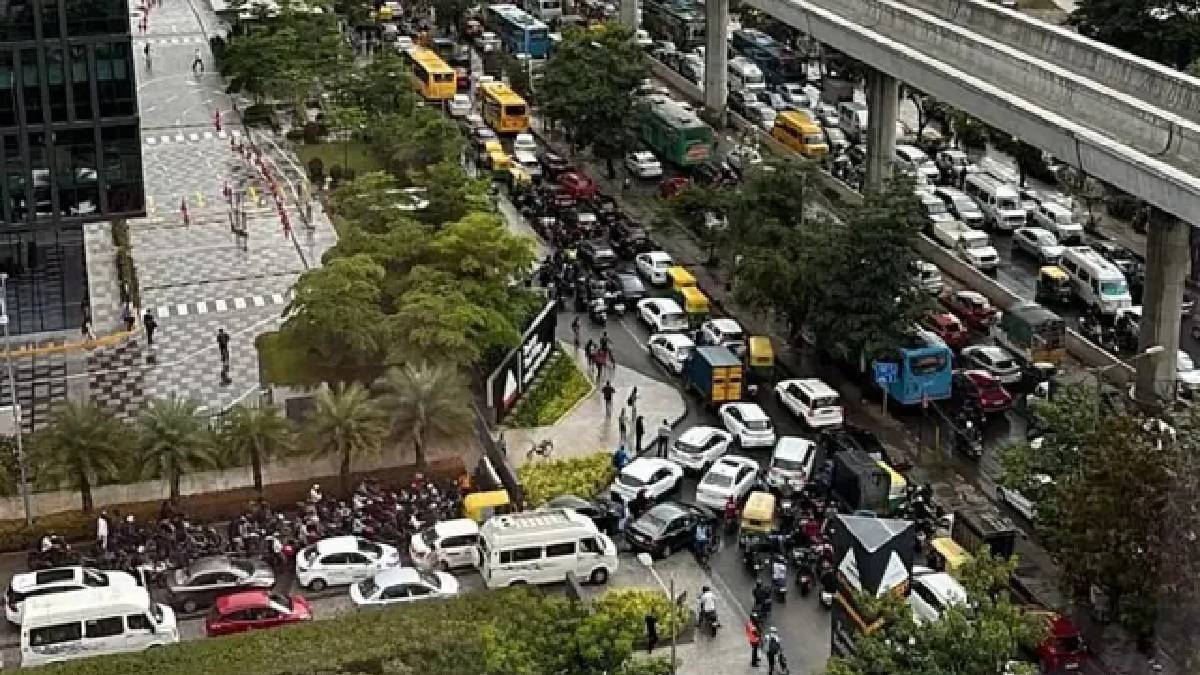
The report highlights the growing challenges of urban mobility in Bengaluru, where rapid population growth and increasing vehicle ownership have outpaced infrastructure development. Despite ongoing metro expansions and road widening projects, traffic delays continue to worsen, affecting both productivity and quality of life.
The city’s traffic woes are not new. Bengaluru has consistently ranked among the world’s most congested cities in global studies. The latest findings underscore how the problem has escalated, with peak-hour delays stretching commutes far beyond reasonable limits. For many residents, what should be a short drive often turns into a frustrating ordeal lasting nearly an hour.
Experts attribute the delays to several factors. The high density of IT parks and office hubs, coupled with inadequate public transport coverage, forces millions to rely on private vehicles. Narrow roads, frequent construction work, and poor traffic management further compound the issue. Additionally, the city’s layout—with multiple bottlenecks and limited alternative routes—makes traffic dispersal difficult.
Comparisons with other Indian metros reveal the scale of Bengaluru’s problem. While cities like Delhi, Mumbai, and Hyderabad also struggle with congestion, their average commute times for 10km are significantly lower. Bengaluru’s 36-minute benchmark places it at the top of the list, highlighting the urgent need for innovative solutions.
Authorities have introduced several measures to tackle the crisis. The expansion of the Namma Metro network, introduction of smart traffic signals, and promotion of carpooling initiatives are steps in the right direction. However, experts argue that long-term relief will only come from a shift towards sustainable transport, including improved bus services, cycling infrastructure, and pedestrian-friendly planning.
For residents, the delays translate into lost time, increased stress, and higher fuel costs. Businesses too are impacted, with logistics and employee productivity suffering due to unpredictable travel times. The environmental toll is equally severe, as prolonged idling contributes to rising pollution levels.
As Bengaluru continues to grow as India’s Silicon Valley, the challenge of balancing development with livability becomes more pressing. The city’s traffic delays serve as a stark reminder that infrastructure must evolve in tandem with urban expansion. Without decisive action, the commute crisis could worsen, undermining the city’s reputation as a global tech hub