CBSE’s reforms go beyond languages. Starting in 2027–28, vocational education will become compulsory from Class 9, giving students practical skills alongside academics. Art education and physical education are already mandatory for Classes 9 and 10, assessed through internal evaluations. By 2029, subjects like computational thinking and artificial intelligence (AI) will also be introduced as compulsory components, preparing students for the digital future. Furthermore, mathematics and science will be offered at two levels (standard and advanced) from Class 9 beginning in 2026–27, allowing students to choose based on aptitude and career goals
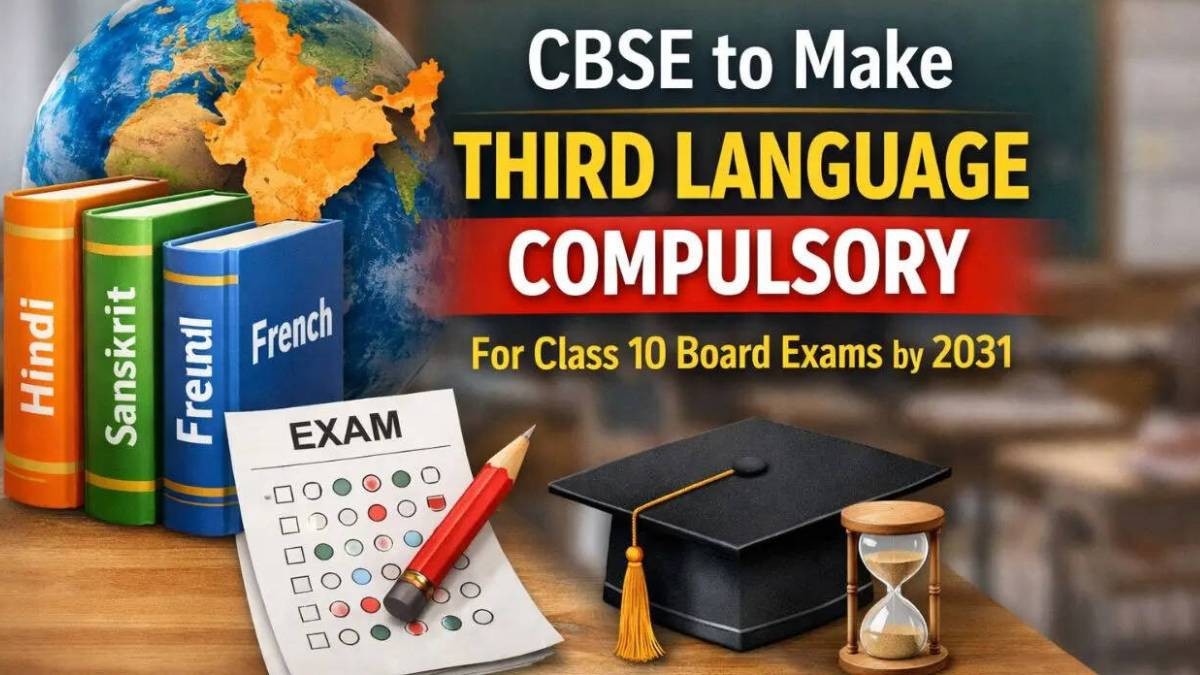
The introduction of a third language will broaden students’ academic exposure and encourage them to appreciate India’s linguistic diversity. While this may increase the workload, it also equips students with valuable skills for higher education and global opportunities. Multilingual proficiency is expected to enhance communication abilities, cultural sensitivity, and career prospects in an increasingly interconnected world.
This move reflects CBSE’s commitment to implementing the NEP 2020 vision of holistic and inclusive education. By embedding languages, vocational training, arts, physical education, and emerging technologies into the curriculum, CBSE aims to prepare students not just for exams, but for life in a rapidly evolving global environment.
The decision to make a third language compulsory from Class 6 in 2026–27 is a landmark reform in Indian education. It emphasizes multilingualism, skill development, and future readiness, ensuring that students graduate with a well-rounded education that balances tradition with modernity.