
NASA’s Artemis II mission has delivered one of the most awe-inspiring sights of the decade: a high-resolution image of Earth taken by astronauts aboard the Orion spacecraft as they journeyed toward the Moon. This marks the first time in more than fifty years that humans have photographed Earth from deep space, reviving memories of the iconic Apollo-era “Blue Marble” image.
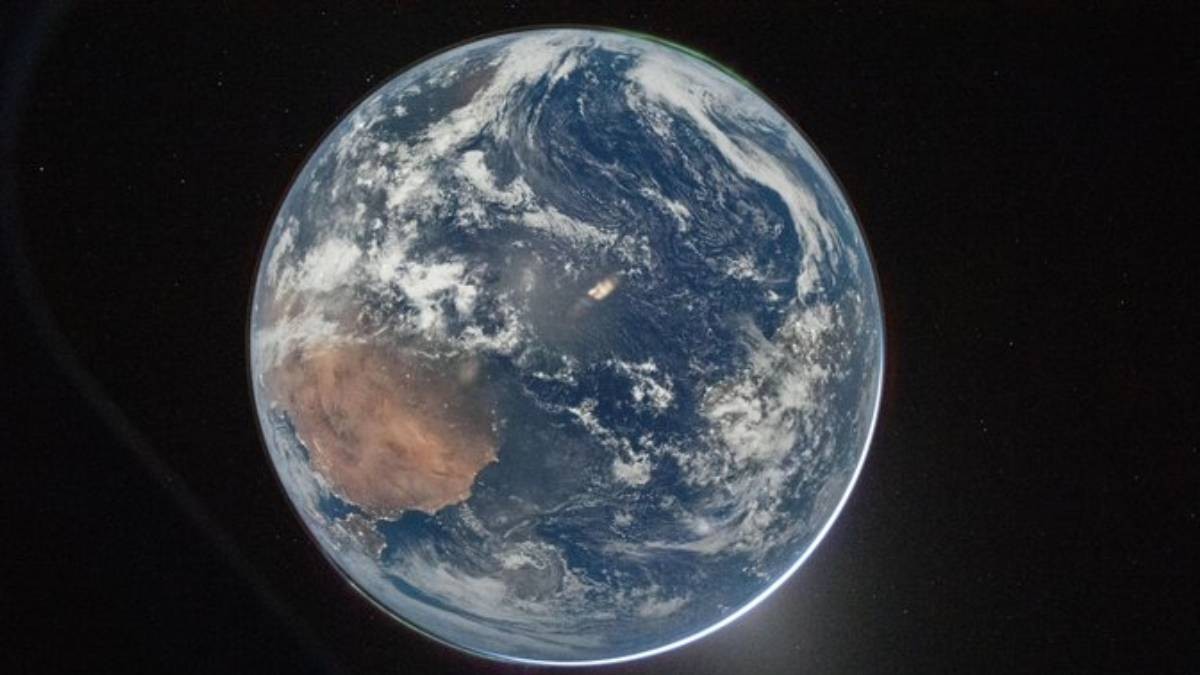
The image was captured shortly after the spacecraft’s translunar injection burn, when Orion had traveled more than 100,000 miles (160,000 km) away from Earth. From this vantage point, our planet appeared as a glowing crescent suspended in the vast darkness of space. The crew described the moment as deeply emotional, with Commander Reid Wiseman noting that watching Earth shrink into the distance was “the most spectacular moment of the mission so far.”
The photograph showcases Earth’s illuminated curve, with vibrant blues and whites contrasting against the black backdrop. Subtle phenomena such as polar auroras and faint zodiacal light—sunlight reflecting off interplanetary dust—were also visible. These details highlight the precision of modern imaging technology and the unique perspective astronauts gain when leaving Earth’s orbit.
Launched on April 1, 2026, Artemis II is NASA’s first crewed mission to the Moon since Apollo 17 in 1972. The mission includes a 10-day flight, with a lunar flyby that will take the crew more than 10,000 km beyond the Moon’s far side before returning to Earth. The crew—Reid Wiseman, Victor Glover, Christina Koch, and Canadian astronaut Jeremy Hansen—are testing Orion’s life-support systems and preparing for Artemis III, which will attempt a lunar landing.
The release of the image has sparked global fascination. Social media platforms were flooded with reactions, with many users calling the photo “humbling” and “a reminder of Earth’s fragility.” Scientists and environmentalists also emphasized the symbolic importance of such images, noting how they inspire reflection on climate change, conservation, and humanity’s shared responsibility for the planet.