
The Cockroach Janata Party (CJP) has witnessed its first major internal split, with former volunteer Manish Brahmbhatt launching a breakaway faction called the Cockroach Janata Party-Democratic (CJP-D). The development comes amid allegations of centralisation and politicisation within the youth-led movement.
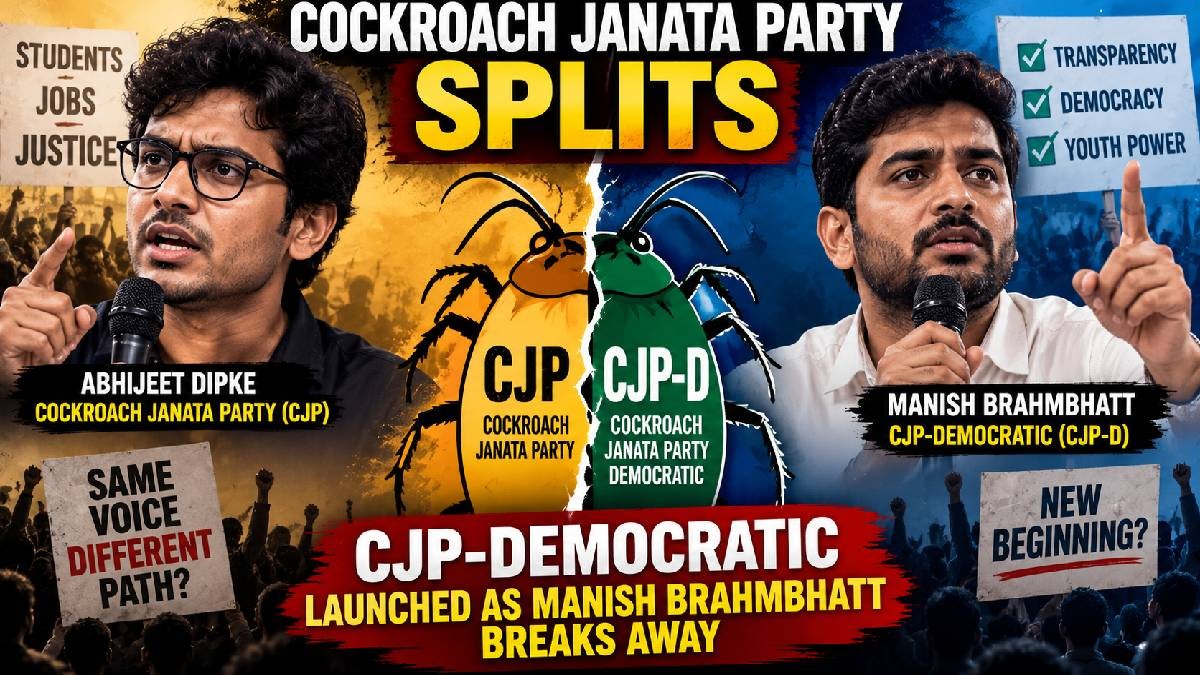
Brahmbhatt announced the new faction on Thursday, September 3, accusing CJP founder Abhijeet Dipke of sidelining grassroots volunteers after the movement's protests gained national attention. He alleged that the organisation had moved away from its original objectives and had become what he called “Team Kejriwal.”
Why Did the Cockroach Janata Party Split?
According to Brahmbhatt, the disagreement centres on the formation of a 12-member national team. He claimed that volunteers and protesters who had participated in the movement were not adequately consulted before the team was formed.
Brahmbhatt also alleged that several members of the new leadership had links with the Aam Aadmi Party (AAP). He argued that the movement should remain independent and focus on issues affecting ordinary citizens rather than becoming aligned with any political party.
The CJP had originally emerged as a satirical online movement before developing into a youth-focused platform raising issues including unemployment, education and alleged irregularities in examinations.
What Is CJP-Democratic?
Brahmbhatt said the new Cockroach Janata Party-Democratic would focus on transparency, accountability and democratic decision-making.
He called on volunteers and supporters to join the breakaway organisation and said its national team would be selected through a democratic process. The group has also announced multiple ways for people to participate, including social media, WhatsApp and a missed-call facility.
CJP Founder Abhijeet Dipke Rejects Political Allegations
The allegations have not gone unanswered. Abhijeet Dipke has rejected claims that the CJP is a “B team” of Congress or AAP, maintaining that the organisation's primary focus remains students and education-related issues.
The split therefore marks a significant moment for the movement, which began as an internet-driven campaign and rapidly gained attention among young people.
What Happens Next?
The emergence of CJP-D could lead to competition between the two factions for volunteers, supporters and influence. While Brahmbhatt's group is positioning itself around grassroots democracy and transparency, the original CJP continues under Dipke's leadership.
For now, it remains to be seen whether the split will weaken the movement or create two competing platforms seeking to champion similar public issues.