
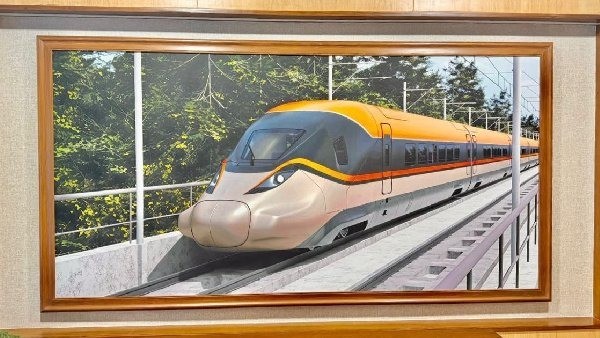
India has taken a historic step toward modernizing its transport infrastructure with the unveiling of the first look of the country’s debut bullet train, set to run between Mumbai and Ahmedabad. The sleek design was revealed by the Ministry of Railways, symbolizing a new era of high‑speed travel that promises to transform connectivity across western India.
The Mumbai–Ahmedabad bullet train project, spanning 508 kilometers, is one of the most ambitious infrastructure ventures in India’s history. With an estimated budget of ₹1.1 lakh crore, the corridor will feature 12 stations, including major hubs such as Mumbai (BKC), Thane, Surat, Vadodara, and Ahmedabad. Once operational, the train will reduce travel time between the two cities to under three hours, a dramatic improvement compared to the current seven‑hour journey.
The unveiled design highlights a streamlined, aerodynamic body, reflecting cutting‑edge engineering and aesthetics. The train sets are expected to achieve speeds of up to 280 km/h, developed under the Make in India initiative with contributions from the Integral Coach Factory in Chennai and BEML in Bengaluru. Officials clarified that the unveiled design is representational, serving as a preview of India’s high‑speed rail ambitions.
Construction progress has been significant, with foundation work completed at several stations in Gujarat and major bridges nearing completion across rivers such as the Narmada and Sabarmati. The project also includes India’s first undersea rail tunnel beneath Thane Creek, a feat of engineering that underscores the scale and innovation behind the venture.
Beyond its technical marvels, the bullet train project carries immense symbolic weight. It represents India’s entry into the league of nations like Japan and France that have pioneered high‑speed rail. Economically, it is expected to boost regional development, enhance trade, and create new opportunities for tourism and business.
As anticipation builds, the unveiling of the first look is more than just a design reveal—it is a promise of a future where speed, efficiency, and modernity redefine travel in India. With operations expected to begin in phases by 2027, the Mumbai–