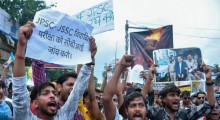
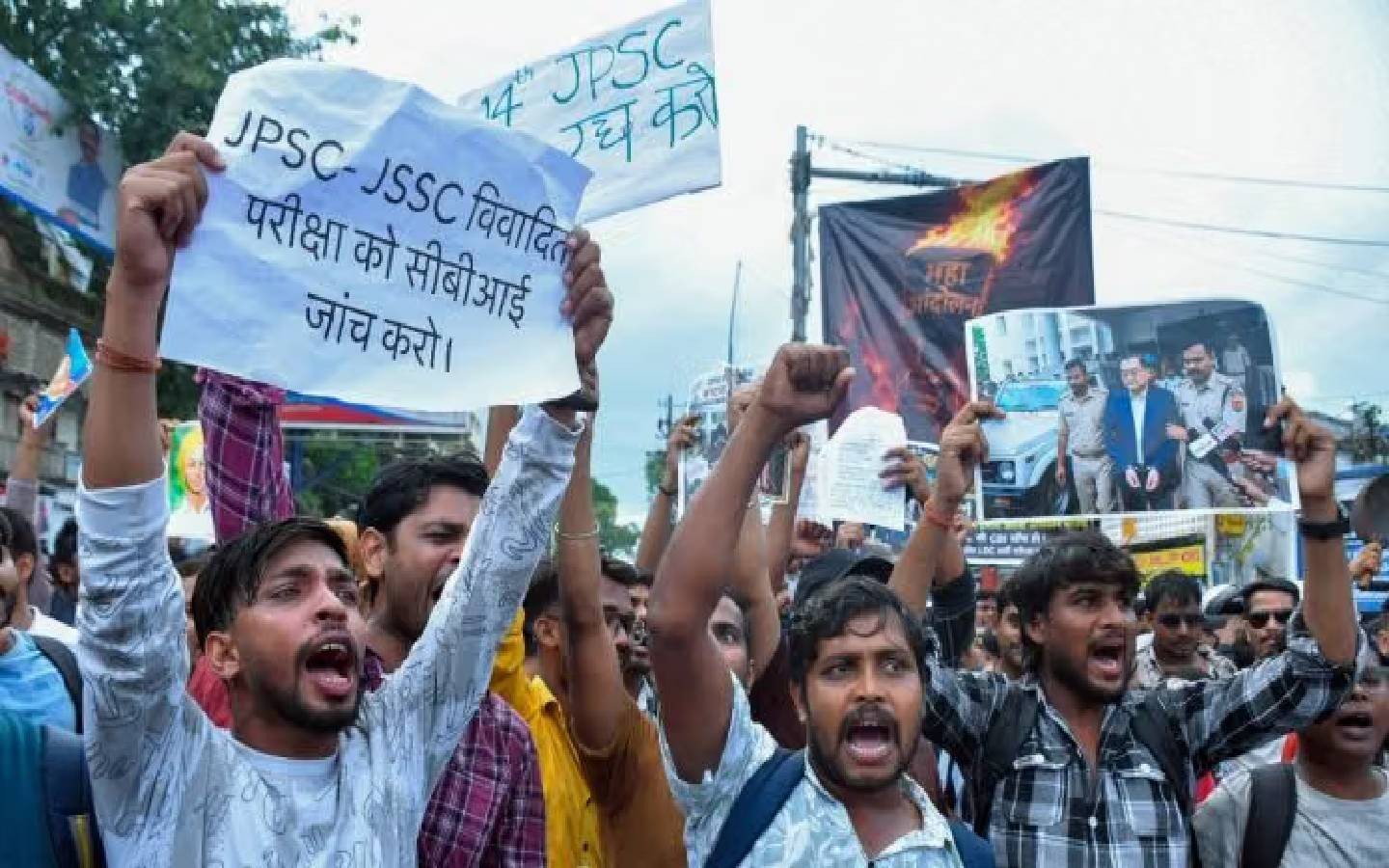
Students across Jharkhand have taken to the streets in large numbers to protest against repeated paper leaks in competitive examinations, demanding accountability and reforms in the education system. Their agitation highlights growing frustration among youth over compromised exam integrity, while questions are being raised about the absence of prominent reporters who were earlier seen covering similar protests.
The Trigger for Protests
The protests erupted after reports of question paper leaks in recruitment and board examinations, which students say have destroyed their trust in the system. Demonstrations were staged in Ranchi, Dhanbad, Jamshedpur, and Bokaro, with students blocking roads, raising slogans, and demanding strict action against those responsible. Many carried placards calling for fair examinations and transparency in recruitment processes.
Students’ Demands
Protesters are urging the government to:
Ensure strict laws against paper leaks and malpractice.
Establish independent monitoring bodies for examinations.
Provide justice to affected candidates by re-conducting compromised exams.
Hold officials accountable for negligence in safeguarding exam papers.
The agitation reflects a broader concern that repeated leaks are eroding meritocracy and pushing deserving candidates into uncertainty.
Silence of Reporters
Students and activists have pointed out the absence of several well-known reporters, who were previously visible during the Citizenship (CJP) protests. Their silence on the Jharkhand issue has sparked criticism, with many questioning why voices that once amplified student struggles are now missing. This perceived lack of coverage has intensified anger among protesters, who feel their movement is being ignored by mainstream media.
Wider Implications
The protests in Jharkhand are part of a larger national debate on examination reforms. With competitive exams serving as gateways to jobs and higher education, leaks undermine the credibility of institutions and fuel disillusionment among youth. The unrest also signals a growing demand for systemic change in how examinations are conducted and monitored in India