
The Maharashtra government has introduced a new regulation that has stirred debate across the state’s transport sector. Starting August 16, taxi and auto‑rickshaw drivers who fail to clear a functional Marathi language test could face cancellation of their licences. The move is aimed at ensuring that drivers operating in Maharashtra possess basic proficiency in the state’s official language, thereby improving communication with passengers and reinforcing cultural identity.
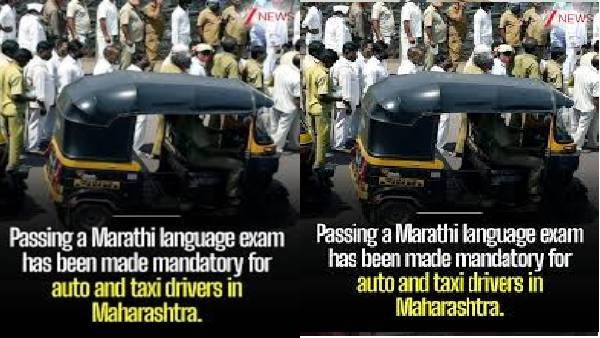
Officials explained that the test will assess drivers’ ability to understand and converse in Marathi at a functional level. This includes basic greetings, directions, and common phrases used in daily interactions with commuters. The government believes that such a requirement will enhance passenger convenience, particularly for local residents who prefer communicating in Marathi.
The announcement has sparked mixed reactions. Supporters argue that the policy will strengthen the cultural fabric of Maharashtra and ensure that drivers are better integrated into the local community. They emphasize that language proficiency is essential for safety, clarity, and customer satisfaction. Critics, however, view the move as restrictive, claiming that it could unfairly impact migrant drivers who have been serving the city for years but may not be fluent in Marathi.
Transport unions have expressed concern about the timeline, noting that many drivers will need additional support to prepare for the test. Calls for training programs and language workshops have grown louder, with unions urging the government to provide resources rather than impose penalties. Some have also warned that sudden licence cancellations could disrupt public transport services, especially in cities like Mumbai and Pune where demand is high.
The government has defended the decision, stating that the policy is not intended to exclude non‑Marathi speakers but to encourage inclusivity and respect for the state’s linguistic heritage. Officials have hinted at possible support measures, including free language classes, to help drivers meet the requirement.
Public opinion remains divided. While many commuters welcome the idea of smoother communication with drivers, others worry that the regulation could reduce the availability of taxis and auto‑rickshaws if large numbers of drivers fail the test. The debate highlights the tension between cultural preservation and practical urban mobility.
In conclusion, Maharashtra’s decision to mandate a functional Marathi language test for taxi and auto‑rickshaw drivers marks a significant shift in transport policy. With the August 16 deadline approaching, the focus will be on how effectively drivers adapt and how the government balances enforcement with support. The outcome will shape not only the transport sector but also the broader conversation about language, identity, and inclusivity in the state