
China has announced the creation of a new county named Cenling, strategically located near the Karakoram Range and close to the borders of Pakistan-occupied Kashmir (PoK) and Afghanistan. The county falls under Kashgar Prefecture in Xinjiang, a region already known for its sensitive geopolitical positioning. This move has sparked fresh concerns about China’s expanding administrative footprint in areas adjacent to disputed territories.
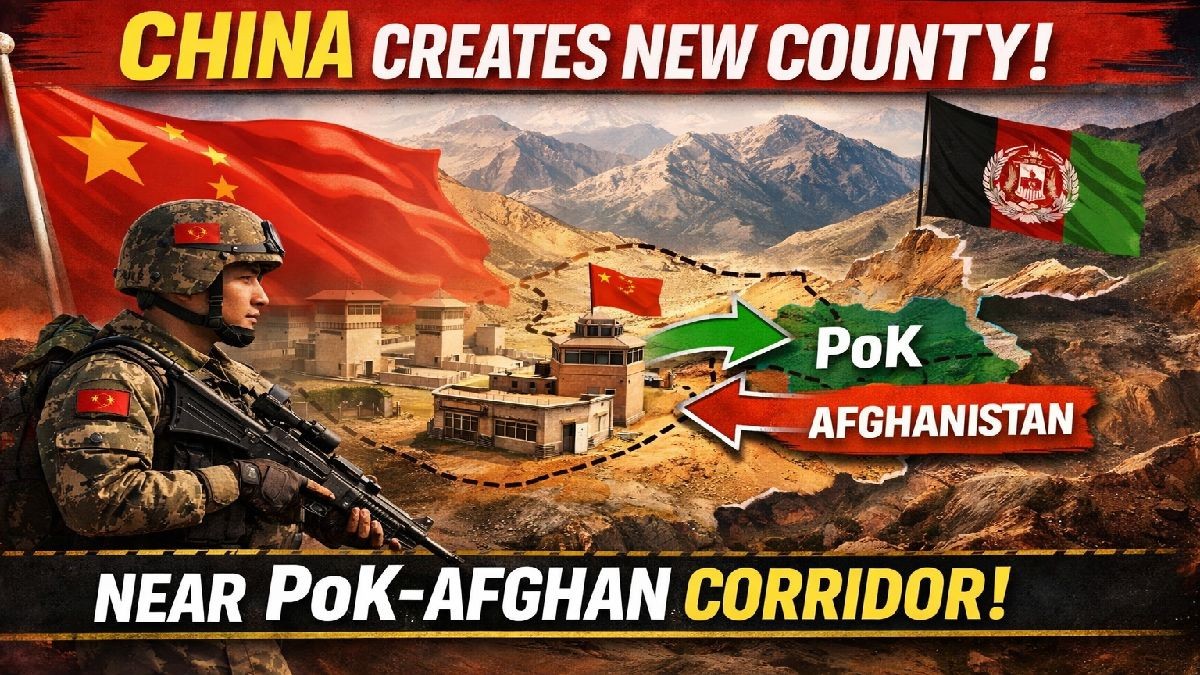
The establishment of Cenling marks the third new county created in Xinjiang in just over a year, following the earlier formation of Hean and Hekang counties. Both of those developments had already triggered alarm among observers due to their proximity to contested borders and strategic corridors. Analysts suggest that the creation of new counties in such locations is part of a broader pattern of strengthening administrative control and infrastructure in regions critical to China’s connectivity projects, including the China-Pakistan Economic Corridor (CPEC).
India has consistently protested such moves, particularly when they involve areas it considers part of its sovereign territory. For instance, Hean county includes portions of Aksai Chin, a region claimed by India but controlled by China since the 1962 war. New administrative divisions like Cenling are therefore viewed in New Delhi as attempts to consolidate China’s presence in disputed zones, complicating the already tense border dynamics.
The timing of Cenling’s creation adds another layer to the region’s security challenges. With its location near the PoK–Afghanistan corridor, the county could serve as a hub for logistical and strategic operations, further embedding China’s influence in South Asia’s sensitive borderlands. This expansion underscores Beijing’s long-term approach to securing its western frontier while simultaneously advancing its Belt and Road Initiative.
For India, the announcement is a reminder of the ongoing complexities in managing border disputes and regional security. As China continues to expand its administrative reach in Xinjiang, the implications for South Asian geopolitics are significant, raising questions about sovereignty, strategic balance, and the future of contested territories.