
ndia has officially increased passport fees effective July 1, 2026, marking the first revision in 14 years. This change impacts millions of citizens, including frequent travelers, NRIs, and families planning international trips. The hike reflects rising administrative costs and modernization efforts in passport services, but it also adds a financial burden for those seeking new or replacement documents.
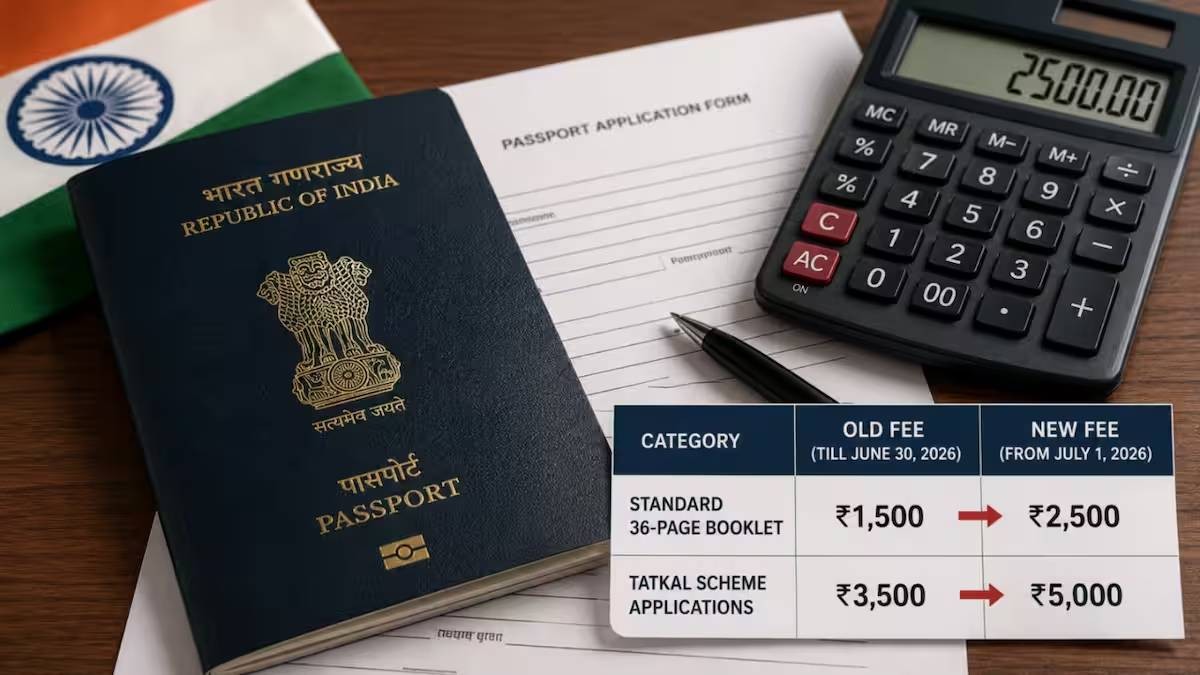
Under the revised structure, the fee for a 36-page passport (Normal) has risen from ₹1,500 to ₹2,500, while the 60-page passport (Normal) now costs ₹3,500, up from ₹2,000. For urgent applications, the Tatkal 36-page passport fee has increased from ₹3,500 to ₹5,000, and the Tatkal 60-page passport now stands at ₹6,000 compared to the earlier ₹4,000. Replacement of lost or damaged passports has become significantly more expensive, with charges reaching up to ₹8,500.
The government has justified the hike by citing the need to improve infrastructure, enhance security features, and streamline digital services for passport issuance. Officials argue that the new fees will support faster processing, better facilities at Passport Seva Kendras, and integration with advanced biometric systems. However, the increase has sparked mixed reactions among citizens. While some acknowledge the importance of modernization, others feel the sudden jump in costs places an additional strain on households already facing rising expenses in travel and documentation.