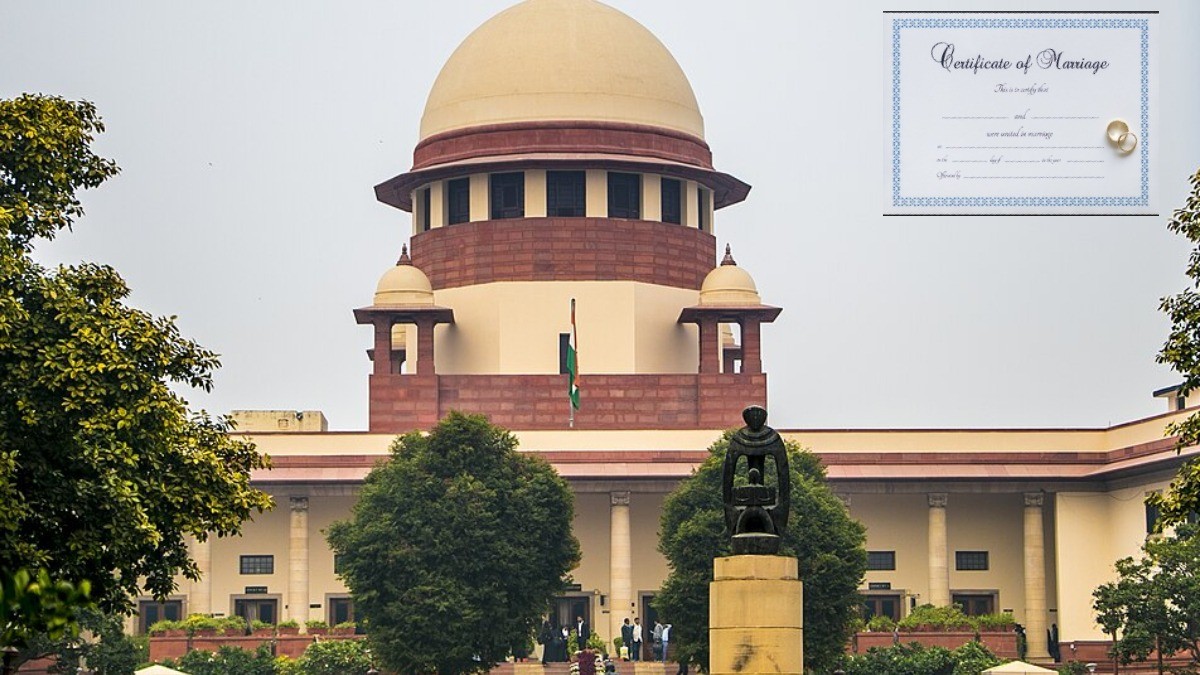
In April 2024, the Supreme Court delivered a significant judgment that reshaped the understanding of Hindu marriage law. The Court stated that a marriage certificate, while important for legal documentation, does not itself create the bond of husband and wife. Instead, the marriage must be solemnised through the prescribed Hindu ceremonies, such as saptapadi (seven steps around the sacred fire). Without these rituals, the certificate is legally meaningless. This ruling came in the case of Dolly Rani v. Bansi Lal, decided by a bench led by Justice B.V. Nagarathna and Justice Augustine George Masih.
Beyond Paperwork
The judgment highlights a deeper truth: marriage is not just a contract on paper, but a union rooted in tradition, culture, and faith. For many couples, the rituals are more than symbolic—they represent the spiritual and social recognition of their bond. By insisting on ceremonies, the Court reinforced that Hindu marriage is both a personal and communal event, where families and society acknowledge the union. This distinction between paperwork and ritual ensures that the institution of marriage retains its cultural integrity.
Human Impact
For couples, this ruling carries real consequences. Those who may have registered their marriage without performing Hindu rites could find themselves in a legally uncertain position. It also affects matters of inheritance, divorce, and spousal rights, since the law now clearly states that registration alone is insufficient. The decision serves as a reminder that while modern life often seeks shortcuts, traditions still hold weight in defining relationships. For many, this ruling validates the emotional significance of rituals that bind two people together before family, community, and faith.
A Balance of Law and Tradition
Ultimately, the Supreme Court’s stance bridges the gap between modern legal systems and age-old customs. It acknowledges the importance of documentation but insists that ceremonies remain central to Hindu marriage. This ruling is not just about legality—it’s about honouring the cultural fabric of India, where marriage is seen as a sacred bond rather than a mere contract. By reinforcing the role of rituals, the Court has ensured that the essence of Hindu marriage remains intact, reminding us that some traditions cannot be replaced by paperwork alone.