Zomato is testing a new way of serving office workers by installing food vending machines, or fresh-food pods, at select corporate workplaces in Gurugram. The pilot, reportedly called Zomato Now, is being conducted in partnership with food and restaurant brands and is aimed at giving employees quicker access to meals.
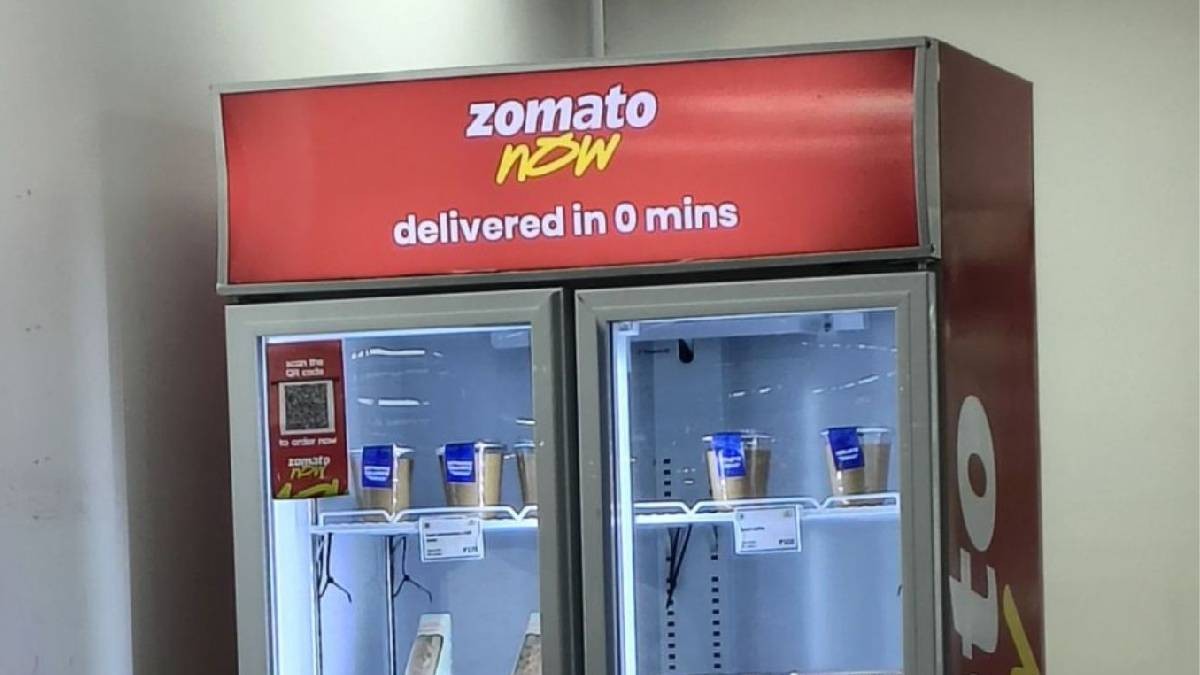
The initiative represents a different approach to quick food delivery. Instead of waiting for an order to be prepared at a restaurant and then delivered by a rider, food is placed closer to the customer inside the workplace. Employees at participating offices can access food from the pods, potentially reducing waiting and last-mile delivery time.
How Zomato Now Could Work
The food pods are reportedly being tested at a limited number of corporate offices in Gurugram. They are intended to provide employees with food from participating restaurants and brands directly at their workplaces. Zomato has not publicly disclosed the number of machines, participating offices or the exact commercial terms of the pilot.
The model could be particularly useful during busy lunch hours. Corporate campuses can create delivery challenges because riders may have to wait at security gates, reception areas or designated delivery points. Keeping food inside the office could eliminate much of that last-mile friction.
Why Zomato Is Testing Vending Machines
The experiment comes as food-delivery companies look for faster and more efficient ways to serve customers. Zomato's sister company Blinkit is already operating its rapid-food business Bistro, which uses cloud kitchens to offer food through a quick-delivery model.
Zomato Now takes a different approach: rather than making delivery faster, it moves the food closer to consumers before they order.
Corporate offices may also provide concentrated demand. A single workplace can have hundreds or thousands of employees, potentially allowing food to be stocked at one location rather than requiring individual deliveries to multiple addresses.
A New Direction for Workplace Food
The vending-machine experiment could eventually create a hybrid between a traditional cafeteria and food delivery. If the pilot proves successful, Zomato could potentially expand the concept to more corporate campuses and other high-density workplaces.
However, several factors will determine whether the model can scale, including food freshness, inventory management, demand forecasting, replenishment costs and employee adoption.
For now, Zomato Now remains a pilot rather than a nationwide service. The Gurugram experiment will provide the company with data on whether placing fresh food directly inside offices can become a commercially viable alternative to conventional delivery