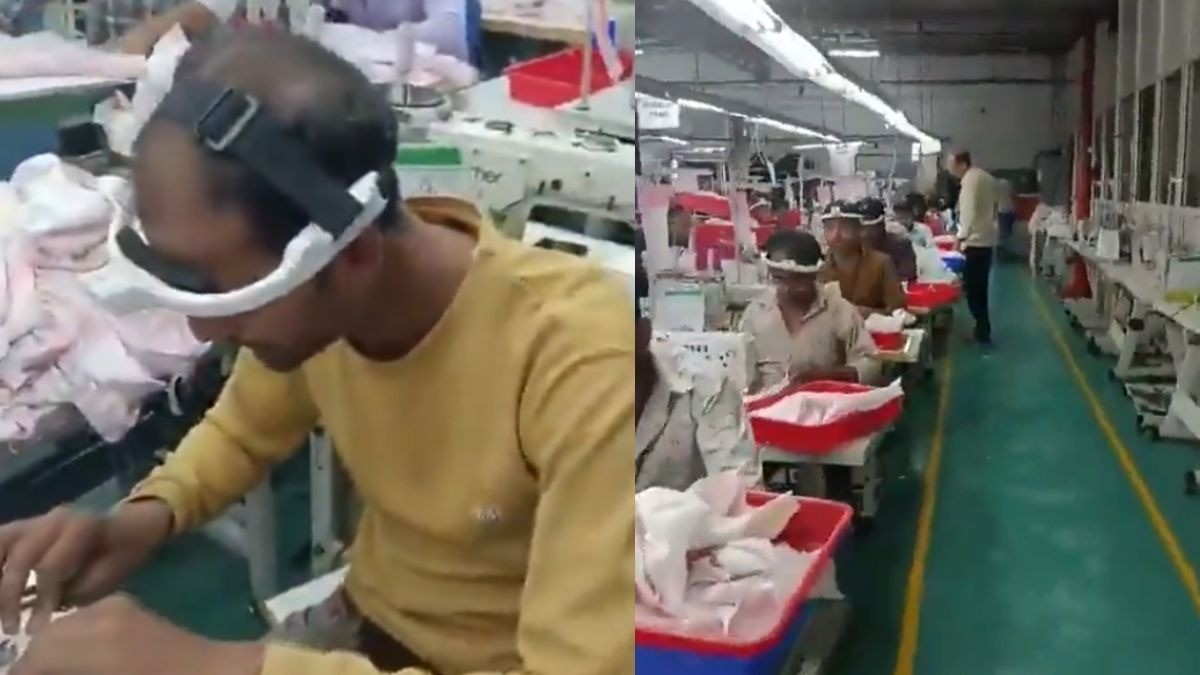
In a garment factory, workers have recently been seen wearing head-mounted cameras to capture their hand movements while sewing and tailoring. These recordings are being used to train artificial intelligence systems, teaching machines the intricate skills of stitching, cutting, and assembling garments. The development has sparked a pressing question: will AI soon take over the jobs of human workers?
The Purpose of AI Training
The cameras record detailed hand movements, allowing AI to learn the precision and rhythm required in tailoring. By analyzing thousands of hours of footage, machines can potentially replicate tasks such as hemming, button stitching, and fabric alignment. This technology aims to improve efficiency, reduce errors, and speed up production.
Will AI Replace Workers?
While AI can mimic repetitive tasks, tailoring involves creativity, adaptability, and problem-solving—qualities machines still struggle to master. Human workers bring judgment, design sense, and cultural understanding that cannot be easily replicated. Instead of outright replacement, AI is more likely to assist workers, automating routine tasks while leaving complex, creative work to humans.
The Future of Work in Garment Factories
Short Term: AI will act as a support system, reducing workload and improving productivity.
Medium Term: Workers may need to upskill, learning to operate and supervise AI-driven machines.
Long Term: Jobs may evolve rather than disappear, with humans focusing on design, customization, and quality control.
FAQs
Q1: Will AI completely replace garment workers?
Not immediately. AI will likely complement human skills rather than eliminate them.
Q2: Why are workers wearing cameras?
To capture hand movements that train AI in sewing and tailoring techniques.
Q3: What tasks can AI handle in tailoring?
Repetitive stitching, cutting, and assembly, but not creative design or complex adjustments.
Q4: How can workers stay relevant?
By upskilling in design, machine supervision, and creative tailoring, areas where human judgment is essential.