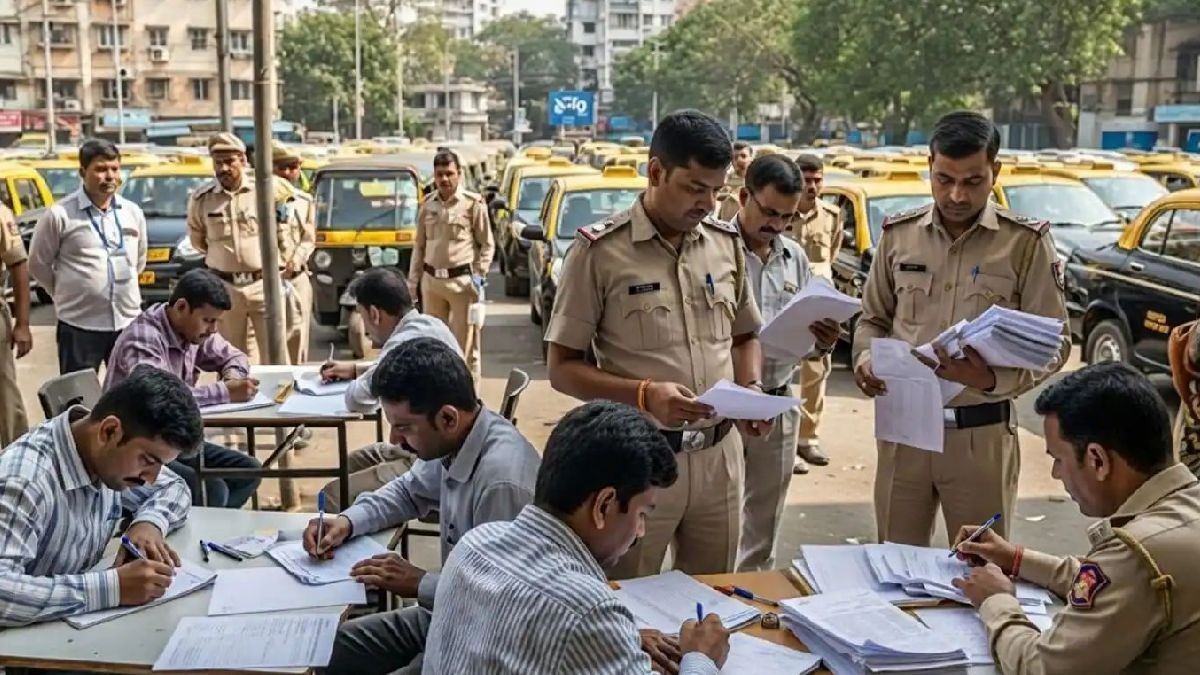
Auto-rickshaw and taxi drivers in Mumbai may soon be required to pass a Marathi language test to continue operating legally in the city. The proposed move has sparked widespread discussion among drivers, commuters, and transport authorities, as it could affect thousands of permit holders across the metropolitan region.
Mumbai’s Auto and Taxi Drivers May Soon Need to Pass Marathi Test to Keep Permits
According to reports, the proposal aims to ensure that drivers can communicate effectively with passengers in Marathi, the official language of Maharashtra. Authorities believe that improving language skills among drivers will enhance passenger convenience, reduce misunderstandings, and promote the use of the regional language in daily public interactions.
The proposed rule suggests that drivers who fail to pass the Marathi test may face difficulties in renewing their permits. In some cases, failure to comply with the language requirement could even lead to the cancellation of permits. Transport officials have indicated that the test would focus on basic conversational Marathi, including understanding directions, common phrases, and communication with passengers.
This development is expected to have a major impact on drivers who have migrated from other states and may not be fluent in Marathi. Mumbai is known for its diverse population, with drivers coming from different parts of India to earn a living. Many driver associations have expressed concern about the proposal, stating that sudden enforcement of such rules could threaten the livelihood of thousands of workers who depend on daily earnings from auto and taxi services.
Supporters of the proposal argue that learning basic Marathi should not be seen as a burden but as an essential skill for those working in public-facing roles within the state. They believe that familiarity with the local language helps improve service quality and strengthens cultural identity. Some have also suggested providing free or subsidized Marathi training classes to help drivers prepare for the test.
Commuters in Mumbai have expressed mixed reactions. While some welcome the idea as a step toward better communication, others worry that strict implementation could reduce the number of available drivers and lead to inconvenience, especially during peak hours.
If implemented, the Marathi language test rule could mark a significant change in the city's transport regulations. Authorities are expected to hold further discussions with driver unions before finalizing the policy, ensuring that any new rule balances language promotion with the protection of livelihoods.