‘She’s Gone’: Man Recounts Horror of Watching Wife Get Buried in Nepal Flood Mud
A devastating account from a survivor has brought a deeply personal dimension to the catastrophic floods that struck Nepal near the Tibet border. Keshav Prasad Baral, a 68-year-old survivor, said he watched helplessly as his wife was swept away and buried by a massive wall of mud during the disaster.
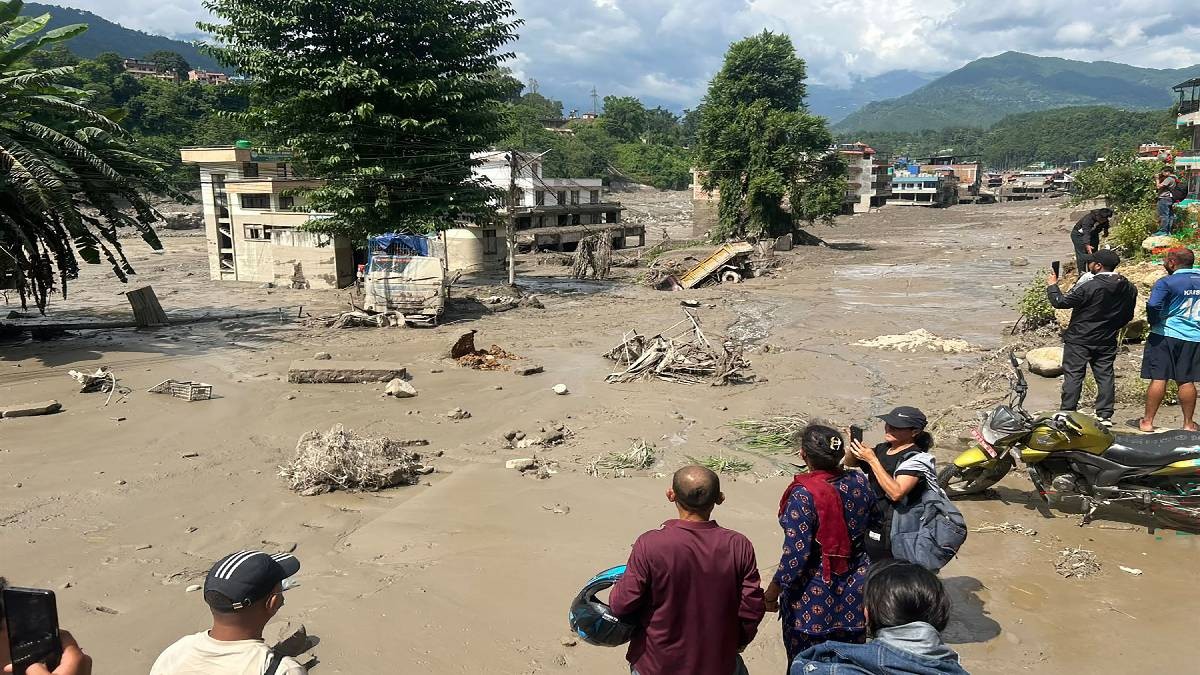
The flash floods struck Nepal's Rasuwa district on August 26 after a huge collapse of ice and rock in the Himalayan region sent an enormous surge of water, mud and debris through river valleys. Entire settlements and infrastructure were damaged or swept away, leaving hundreds of people missing.
‘I Tried to Grab My Wife’s Hand’
Baral described the terrifying moment when the flood entered his home. According to his account, a huge gush of mud came toward the house and rapidly rose higher.
As the torrent entered the building, Baral tried to save his wife by taking her toward the terrace. However, the force of the mud separated them, and she was swept away.
Baral survived the disaster and was eventually evacuated by helicopter several hours later. But his wife remained buried beneath the mud.
“My wife is still somewhere beneath the mud. She’s gone,” he said, describing the devastating aftermath of the disaster.
Entire Communities Swept Away
Baral's experience is one of numerous heartbreaking stories emerging from the disaster zone. The flash flood moved with extraordinary speed, carrying rocks, mud, ice and debris through populated areas.
The International Federation of Red Cross and Red Crescent Societies said entire villages and market areas had been wiped out. Rescue operations have been complicated by damaged roads, bridges, electricity networks and communication infrastructure.
Another survivor described escaping by clinging to a mango tree while watching the building where he had been working disappear in the floodwaters.
Death Toll and Missing People
The disaster has killed at least 165 people in Nepal, according to the latest reports, while hundreds remain missing. The catastrophe has also affected foreign tourists and pilgrims, including Indians travelling toward the Kailash Mansarovar region.
On the Chinese side of the border, authorities have also reported deaths and hundreds of missing people in Tibet. Combined figures from Nepal and Tibet indicate that the number of people unaccounted for has reached into the thousands.
Rescue Operations Continue
More than 5,000 army and police personnel have been involved in rescue and recovery efforts in Nepal. Helicopters have been used to evacuate survivors and transport emergency supplies, although damaged infrastructure and difficult weather conditions have made operations challenging.
The tragedy has highlighted the extreme vulnerability of Himalayan communities to sudden glacial and landslide-related disasters. For families like Baral's, however, the catastrophe is not simply a natural disaster—it is a devastating personal loss, with many still waiting for news of loved ones.