China has reportedly developed a new hypersonic weapons capability designed to threaten high-value aircraft operating thousands of miles from a potential battlefield. The development is part of Beijing's broader effort to expand the role of its large missile arsenal across different military missions.
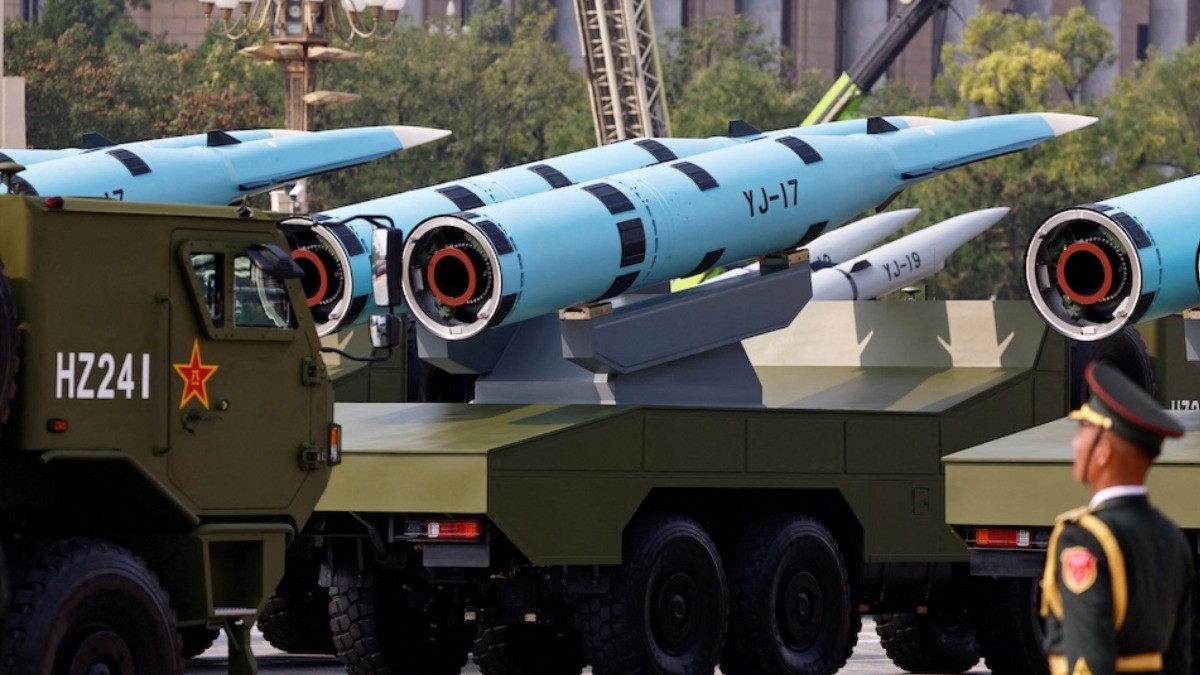
According to a person with direct knowledge of the matter cited by Bloomberg, the Chinese military has developed hypersonic glide vehicles (HGVs) capable of launching air-to-air weapons. Such a system could potentially threaten aircraft including aerial tankers, airborne early-warning and control planes, and other command-and-control platforms that normally operate far from frontline combat.
How Does China's New Missile Capability Work?
Hypersonic glide vehicles are designed to travel through the atmosphere at very high speeds while maintaining the ability to manoeuvre. Unlike conventional ballistic trajectories, their manoeuvrability can make interception more difficult.
The reported Chinese system would take this concept further by allowing an HGV to deploy air-to-air weapons against aircraft. Bloomberg reported that China has also added air-to-air capabilities to some hypersonic cruise missiles and developed anti-ship capabilities for several missile types.
The potential range is particularly significant. An HGV launched from a DF-17 could reportedly travel about 1,500 miles (2,414 km), while the DF-27 has a reported maximum range of approximately 5,000 miles. These ranges could put strategically important locations such as Guam and Hawaii within reach of certain Chinese missile systems.
Why Are High-Value Aircraft Important?
Modern military operations depend heavily on aircraft that provide support rather than directly engaging enemy fighters. Airborne early-warning aircraft, aerial refuelling tankers and flying command posts help coordinate combat operations and extend the range of fighter aircraft.
A weapon capable of reaching these aircraft from extremely long distances could therefore threaten an opponent's broader military network rather than simply targeting frontline aircraft.
The United States and China are both developing increasingly long-range air-to-air weapons. The US is working on systems including the AIM-174B and AIM-260, while the US Navy has also announced testing of the AIM-424 Malice, reported to have a range exceeding 300 miles.
China’s Growing Missile Arsenal
The reported development comes amid a significant expansion of China's missile capabilities. The Pentagon estimated that China had at least 3,150 ballistic missiles and 300 ground-launched cruise missiles as of 2024. Those figures represented substantial increases compared with 2015 estimates.
However, long-range missile attacks against moving aircraft remain technically challenging. Such systems require highly accurate and continuously updated targeting information. Long flight times can also give an adversary opportunities to disrupt the targeting chain.
The reported development nevertheless highlights China's growing emphasis on long-range and hypersonic weapons and could have important implications for future air operations in the Indo-Pacific.