
The dramatic downfall of one of China's most powerful property tycoons has reached a major turning point. Hui Ka Yan, founder and former chairman of China Evergrande Group, has been sentenced to life imprisonment by a court in Shenzhen for multiple financial crimes linked to the collapse of the heavily indebted property giant. The court also ordered the confiscation of his personal assets.
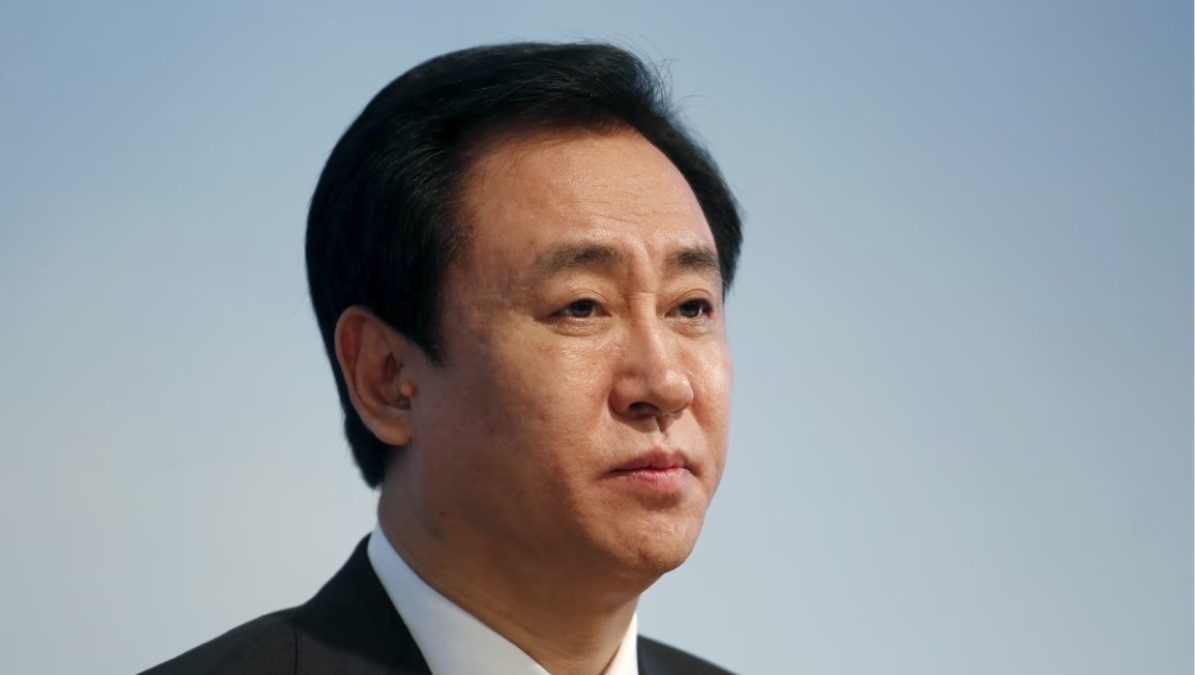
Hui, also known as Xu Jiayin, was once one of China's wealthiest businessmen. He built Evergrande into one of the country's biggest property developers after founding the company in 1996. At the peak of his wealth in 2017, Forbes estimated his fortune at around $45.3 billion. His extraordinary rise, however, eventually turned into one of China's biggest corporate collapses.
Why Was Hui Ka Yan Sentenced to Life?
The Shenzhen court found Hui guilty of a series of serious financial offences. Reports say he pleaded guilty to multiple charges, including fundraising fraud, misuse of funds, illegal loans, securities-related fraud and bribery. The court found that Evergrande and its related businesses had engaged in large-scale financial misconduct between 2016 and 2021.
According to the court, financial statements were manipulated, assets were inflated and liabilities were concealed. The authorities also accused Hui and others associated with Evergrande of illegally obtaining and using financial resources.
The court additionally ordered the recovery of illegal gains and confiscation of Hui's personal property. He was also deprived of political rights for life.
Evergrande's Massive Debt Crisis
Evergrande became a symbol of China's property-sector crisis after accumulating liabilities of more than $300 billion. The company's aggressive expansion had relied heavily on borrowing and property sales.
When China's authorities began tightening restrictions on excessive borrowing by property developers, Evergrande's financial problems became increasingly difficult to manage. The company eventually defaulted in 2021, triggering wider concerns about China's property market and financial stability.
Evergrande was ultimately ordered into liquidation in 2024, marking the collapse of what had once been one of China's largest real-estate empires.
Heavy Fines for Evergrande
The court has also imposed substantial financial penalties on the companies associated with Hui. Evergrande was fined 8.82 billion yuan, while its mainland property subsidiary Hengda Real Estate was fined 7 billion yuan. Together, the fines amount to nearly 15.82 billion yuan, or more than $2 billion.
More than 50 other people connected with the company were also sentenced in the case. Their prison terms reportedly range from less than two years to 18 years, including several senior executives.
From China's Richest Man to Life Behind Bars
Hui's story represents one of the most dramatic reversals of fortune in China's corporate history. He rose from a modest background in rural Henan to become the face of China's booming property industry.
Evergrande expanded rapidly into real estate, electric vehicles, sports and other businesses. At its height, the company was among China's largest property developers, while Hui became one of Asia's richest individuals.
The company's collapse, however, wiped out much of his personal wealth and left thousands of investors, homebuyers and creditors facing uncertainty.
The life sentence now represents a major legal conclusion to the scandal, although the wider process of recovering Evergrande's assets and compensating creditors is expected to continue.
A Symbol of China's Property Crisis
Hui Ka Yan's conviction is significant beyond Evergrande itself. The company's collapse exposed the risks created by excessive borrowing and aggressive expansion in China's property sector.
The case also sends a strong message about the Chinese government's approach to financial misconduct and corporate fraud. Evergrande's downfall has become closely associated with the broader transformation of China's property market from a period of rapid debt-fuelled expansion to one focused more heavily on financial stability.
For Hui Ka Yan, the journey from billionaire property magnate to life imprisonment and confiscation of his assets marks a remarkable end to one of China's most prominent business success stories.