
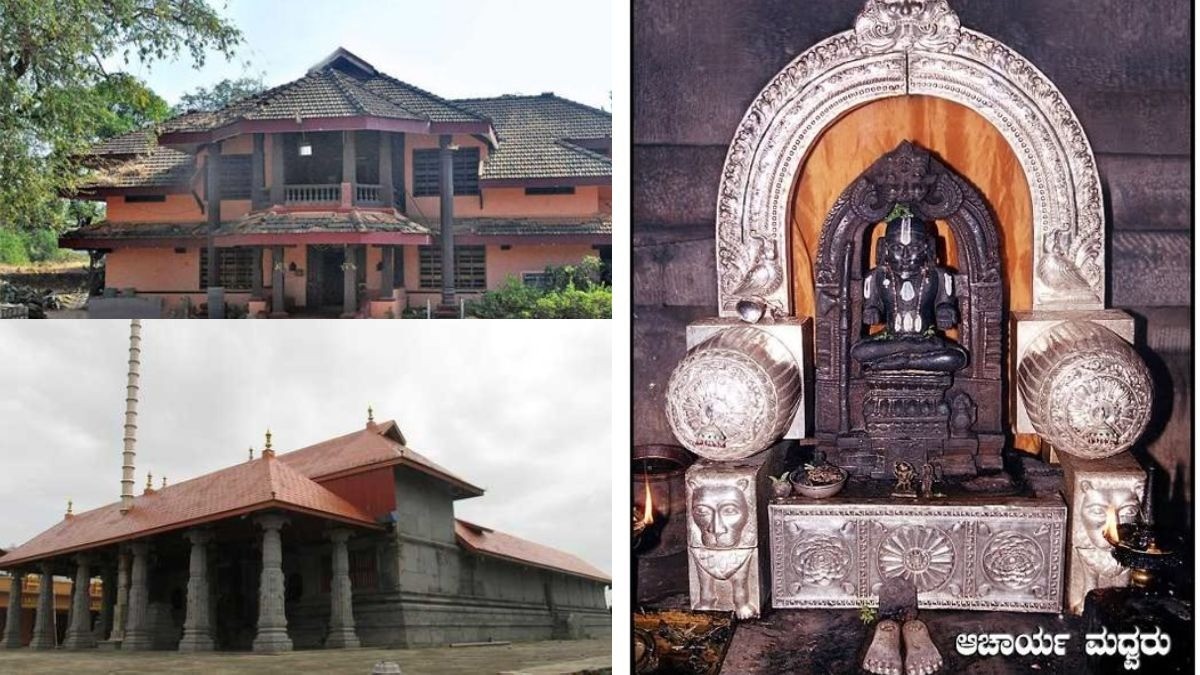
Pajaka Kshetra in Udupi is a sacred site revered as the birthplace of Sri Madhvacharya, the 13th-century philosopher and founder of the Dvaita school of Vedanta. Known as the “Mathura of the South,” it is a spiritual destination marked by holy ponds, temples, and mythological significance.
History and Significance
Pajaka Kshetra lies about 16 km from Udupi and is celebrated as the birthplace of Sri Madhvacharya, one of India’s greatest spiritual teachers. The site is surrounded by the Kunjaru Hill (Durga Betta) and features four sacred ponds or Theerthas created by Lord Parashurama. These are Parasu Theertha, Dhanus Theertha, Gada Theertha, and Bana Theertha, each symbolising divine weapons. Bathing in these ponds is believed to absolve sins. Pajaka also preserves relics of Madhvacharya’s childhood, including the stone where he performed his Aksharaabhyasa (first writing practice).
Temples and Shrines
The site houses the Sri Anantha Padmanabha Temple, also known as Moodu Matha, where Madhvacharya’s ancestors worshipped. The temple is modest yet spiritually powerful, reflecting the deep devotion of the region. Visitors can also see shrines dedicated to Lord Parashurama near the Gada Theertha.
Mythological Perspective
According to local legends, Pajaka was once the abode of the demon king Kukkura. The gods prayed to Lord Vishnu, who incarnated as Madhvacharya to restore dharma. This mythological connection enhances Pajaka’s spiritual aura, making it a revered pilgrimage site.
The Four Theerthas
Parasu Theertha: Located on the eastern side of Pajaka, this pond is linked to Lord Parashurama’s axe. Devotees believe bathing here purifies the soul and removes obstacles.
Dhanus Theertha: Situated on the southern side, this pond symbolises the bow. It offers panoramic views from the hilltop and is considered perennial, never drying up.
Gada Theertha: Found at the base of a hillock, this pond represents the mace. Nearby lies a rare Parashurama Temple, adding to its sanctity.
Bana Theertha: On the northern side, this pond is associated with the arrow. It is revered for its divine energy and believed to grant spiritual strength.
FAQs
Q1: Why is Pajaka Kshetra important?
It is the birthplace of Sri Madhvacharya and home to four sacred Theerthas created by Lord Parashurama.
Q2: How far is Pajaka from Udupi?
It is located about 16 km southeast of Udupi.
Q3: What are the main attractions at Pajaka?
The Anantha Padmanabha Temple, the four Theerthas, and relics of Madhvacharya’s childhood.
Q4: Is bathing in the Theerthas significant?
Yes, it is believed to cleanse sins and bring divine blessings.
Q5: What is the best time to visit Pajaka Kshetra?
October to March offers pleasant weather for pilgrimage and exploration.
Pajaka Kshetra in Udupi is not just a birthplace but a living testimony to India’s spiritual heritage. With its mythological roots, sacred ponds, and temples, it continues to inspire devotees and scholars alike. For pilgrims and travellers, Pajaka offers a unique blend of history, devotion, and natural beauty, making it one of Karnataka’s most treasured spiritual destinations.